Showing posts with label horror. Show all posts

Tuesday, 6 September 2022

ANDREW McBRIDE’S REVIEW of BLOOD WEST by THOMAS D. CLAGETT

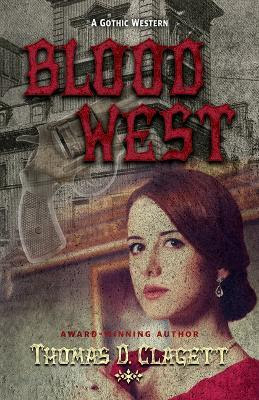
 Here’s my four star review of BLOOD WEST by THOMAS D. CLAGETT (published by Five Star Publishing.) You can find the review on Goodreads and Amazon.co.uk.


MY REVIEW:

Intriguing western-horror hybrid

Acclaimed, award-winning novelist THOMAS CLAGETT follows up his fine novel of the Alamo, ‘Line of Glory,’ with something completely different. ‘Blood West’ mixes the western with horror and the supernatural. It’s mostly set in a New Mexico town in 1885, where the changing West is represented by the appearance of telephones, electric lights and elevators. A female Pinkerton Detective works undercover, investigating a series of grisly killings. She soon suspects something neither wholly human nor animal is stalking the town as darkness falls. Could it even be a nightmare from the Old World visiting the New – a vampire? Clagett ratchets up the tension as the body count mounts and the writing is expert: ‘‘The same stars were ugly pockmarks in the blackness of a long, terrible night." Recommended.


Here’s my blog about Tom’s excellent Alamo novel LINE OF GLORY, which includes a review: https://andrewmcbrideauthor.blogspot.com/2019/03/author-favourites-line-of-glory-by.html


Here’s the BLURB for BLOOD WEST:

Summer, 1885. Something inexplicable has come to the railroad town of Las Vegas in the Territory of New Mexico. Asked to investigate, the Pinkerton Detective Agency sends their best detective. Her name is Hattie Lawton. But no one can know her true identity or why she has been sent, because, as Hattie knows well, no one can keep a secret. She poses as a nurse, hired to tend the consumptive patients staying at the Montezuma, the newest and grandest hotel in the famous Harvey House chain. Finding information proves difficult for Hattie. Deputy Sheriff Antonio Valdes resents her attempts. Father John Lanigan fears her, but something else frightens the priest even more: a creature that some people swear can change its shape—a creature that is afraid of nothing.

VAMPIRES

I plundered this information on vampires from Wikipedia. The subject matter encompasses everything from a South American bat, a 15th Century warlord, a gothic novel from the 1890s to a teenage Californian girl from the 1990s! This blog offers only the briefest look. It’s not intended to be remotely exhaustive, otherwise it would take 6 months to read!

IN FOLKLORE 

In folklore the vampire is an undead person rising from the grave after death, subsisting by feeding on the vital essence (generally the blood) of the living.

Tales of vampiric creatures have existed for millennia, in Mesopotamian, Hebrew, Ancient Greek, Roman and other cultures. Superstitious fears of the dead returning are evident, for example, in a 9th Century grave in Denmark, bearing ‘a grave binding inscription’ used to keep the deceased in its grave. The vampire's head, body, or clothes could be spiked and pinned to the earth to prevent rising. Below is a 13th century skeleton found in Bulgaria stabbed through the chest with an iron rod.


Romani people drove steel or iron needles into a corpse's heart and placed bits of steel in the mouth, over the eyes, ears and between the fingers at the time of burial. In Bulgaria over 100 skeletons with metal objects, such as plough bits, embedded in the torso have been discovered. Other means of keeping the dead in their graves included burying a corpse upside-down, or placing earthly objects, such as scythes or sickles, near the grave to satisfy any demons entering the body or to appease the corpse and keep it in its coffin.

Almost every culture has mention of blood-drinking demons. Creatures attempting to drink blood from men were depicted on shards of pottery excavated from ancient Persia. 

The term vampire was popularized in the early 18th Century when the local superstitions about these creatures in the Balkans and Eastern Europe were first widely reported in Western Europe. The belief in vampires spread dramatically across the continent, resulting in outbreaks of mass hysteria, corpses being staked or beheaded, people being accused of vampirism and even public executions. This hysteria, commonly referred to as the "18th-Century Vampire Controversy", raged for a generation. The word vampire (as vampyre) first appeared in English in 1732, in news reports about the vampire "epidemics" in Eastern Europe. The term was derived from the German Vampir.


During the late 18th and 19th centuries the belief in vampires spread across the world. In 1892 a 19-year old girl who died in Rhode Island was suspected of vampirism. Her father, assisted by the family physician, removed her from her tomb two months after her death, cut out her heart and burned it to ashes. It’s even survived into modern times: allegations of vampire attacks swept through Malawi during late 2002 and early 2003, with mobs stoning one person to death. And then in 2017 fear and violence recurred, when 6 people accused of being vampires were killed.

In the earlier traditions, before the 19th Century, vampires were usually described as bloated in appearance, and ruddy, purplish, or dark in colour; these characteristics were often attributed to the recent drinking of blood. They often wore shrouds. They were corpses who rose from their graves at night to suck the blood of the living, after which they returned to their cemeteries. The persons so sucked waned, grew pale, and fell into ill health, while the feeding corpses grew fat, rosy-cheeked, and enjoyed an excellent appetite. Evidence that a vampire was active in the area included the death of cattle and sheep as well as humans.

The origins of these traditions is sometimes ascribed to the ignorance of people in pre-industrial societies about how decomposition effects the body after death and their attempts to rationalize this. Rates of decomposition vary depending on temperature and soil composition. Corpses swell as gases from decomposition accumulate in the torso and the increased pressure forces blood to ooze from the nose and mouth. This causes the body to look plump, well-fed and "ruddy" - changes that are all the more striking if the person was pale or thin in life. Darkening of the skin is also caused by decomposition. So, it’s not surprising the pre-industrial man, seeing corpses dug up and looking healthier than they had been in life, suspected some demonic force was at work.

THE VAMPIRE TRANSFORMED BY LITERATURE

The image of the vampire was transformed in 1819 with the publication of the first prose fiction piece concerned with vampires: ‘The Vampyre.’ Initially credited to the poet LORD GEORGE BYRON, it was in reality authored by Byron's personal physician, JOHN POLIDORI. It was highly popular and influential. The vampire theme continued in ‘penny dreadful’ serial publications such as ‘Varney the Vampire’ (1847,) JOSEPH SHERIDAN LE FANU’s 1872 novel ‘Carmilla’ and the quintessential vampire novel, ‘Dracula’ by the Irish writer BRAM STOKER, published in 1897.


BRAM STOKER (1847-1912)

In the course of these 19th Century works of fiction the vampire morphed from a creature that had been plump and rosy-cheeked (or even purplish) to something usually tall, deathly-pale and gaunt, definitely not reflected in mirrors. Unlike the vampires of folklore they were vulnerable to, and hid from, sunlight. They sprouted fangs, while the trademark long black cloak didn’t appear until stage productions of the 1920s. Perhaps most notably, Bram Stoker gave his lead vampire a name – COUNT DRACULA – the persona (at least on the surface) of a charismatic, gentlemanly and sophisticated aristocrat, and the ability to turn into a bat.

VAMPIRE BATS

Vampire bats were integrated into vampire folklore after they were discovered on the South American mainland in the 16th century. A purely New World species, they had nothing to do with the vampires of folklore, who had existed long before the bats were discovered. The bats were named after the folkloric vampire rather than vice versa.


The vampire bat's bite is usually not harmful to a person, but the bat has been known to actively feed on humans and large prey such as cattle and often leaves the trademark, two-prong bite mark on its victim's skin. But vampires only transformed into bats for the first time in 1897, in Bram Stoker’s novel.

WHAT’S IN A NAME – COUNT DRACULA

VLAD THE IMPALER

The original COUNT DRACULA appears to be VLAD the THIRD (born c.1428), a ruler of Wallachia, the southern region of Romania. He is often considered one of the most important leaders in Wallachian history and is a national hero of Romania. Diplomatic reports in the 15th century referred to him as Dracula, Dracuglia, or Drakula.  Late in his life he signed two letters as "Dragulya" or "Drakulya". Dracula means "[the son] of Dracul (or the Dragon)". In modern Romanian, dracul means "the devil."


Vlad appears to have been a flesh-and-blood man who was more terrifying than any fictional vampire. Even by the standards of the brutal times in which he lived, he was noted for his cruelty. His propensity for impaling enemy prisoners earned him a nick-name that still chills down the centuries: ‘Vlad the Impaler.’ He died in mysterious, violent circumstances in 1476 or 1477.

Vlad seems to be guilty of many evils, but there’s no record vampirism was one of them. Apart from residing in the same country (Romania) he seems to have nothing in common with a late 19th Century sophisticated aristocrat who is also a vampire. So why did Bram Stoker choose to name his chief vampire after a ruthless 15th Century warlord?

Bram Stoker had researched vampire superstitions of Transylvania in Romania (even though Vlad was ruler of Wallachia, an adjoining province.) Stoker authorities say the author "apparently did not know much about" Vlad the Impaler, "certainly not enough for us to say that Vlad was the inspiration for" Count Dracula, and that any connection to Vlad is “tenuous.” Stoker's working papers for his book contain no references to Vlad. The name of the Dracula character in all drafts but the later ones is 'Count Wampyr'.

So why Count Dracula? We’ll never know. Viewing his decision as a fellow novelist, I think it’s quite likely Stoker just thought it was a great name and decided to use it, without knowing much about who the real Dracula was!

Since the success of this book the vampire has become a dominant figure in the horror genre, still popular in the 21st century, spawning books, films, TV shows, and video games.

There’s only time for the very briefest of looks at these depictions, they deserve a separate blog. Vampires in prose fiction include ANNE RICE's highly popular and influential ‘Vampire Chronicles’ books (1976-2003.) 

Film and television

Dracula is a major character in more films than anyone but SHERLOCK HOLMES. Many early films were either based on the novel Dracula or closely derived from it. These included the 1922 silent German Expressionist horror film ‘Nosferatu’ featuring the first film portrayal of Dracula.


‘Dracula’ (1931), starring BELA LUGOSI as the Count was the first talking film to portray Dracula.


Hammer Horror reincarnated Dracula in ‘Dracula’ in 1958, with CHRISTOPHER LEE as the Count and PETER CUSHING as his nemesis, vampire-hunter DR. VAN HELSING.


CHRISTOPHER LEE


PETER CUSHING

This hit movie spawned seven sequels, with Lee reprising the role in all but two of them. By the 1970s, vampires in films had diversified with works such as ‘Count Yorga, Vampire’ and an African Count in 1972's ‘Blacula.’ 


On TV 1972’s ‘Kolchak: The Night Stalker’ revolved around reporter Carl Kolchak hunting a vampire in Las Vegas. This led to a brief spin-off TV series.


DARREN McGAVIN as ‘Kolchak: The Night Stalker’

The film ‘Buffy the Vampire Slayer’ spawned a hit TV series of the same name, running 1997-2003. Buffy (portrayed by SARAH MICHELLE GELLAR) was a 16-year-old high school girl in California who had to interrupt her studies to dispose of the numerous vampires and demons infesting the area. Her adventures mixed excitement and comedy, managing to send up most of the clichés inherent in the genre along the way. 


Buffy and her vampire slayers

Out west vampires turn up out west as early as 1959 in CURSE OF THE UNDEAD.

And the Gorch Brothers of ‘Wild Bunch’ fame re-surface as cowboy vampires in the ‘Buffy’ episode ‘Bad Eggs.’


Other reviews of BLOOD WEST:

“A legendary, murderous monster on the loose, a town in fear for their lives, a posse of lawmen, and a lady Pinkerton agent are brought together in author Thomas Clagett’s riveting thriller, Blood West. Clagett’s remarkable ability to build tension and suspense had me on the edge of my seat until the last page.”

Find BLOOD WEST here: https://www.amazon.com/Blood-West-Thomas-D-Clagett/dp/1432892649/ref=sr_1_1?crid=3HLQ1QRCEZZ7H&keywords=blood+west+thomas+clagett&qid=1648542766&s=books&sprefix=blood+west+thomas+clagett%2Cstripbooks-intl-ship%2C117&sr=1-1

Tuesday, 22 February 2022

AUTHOR FAVOURITES: RIVER RUNS RED by JEFFREY J. MARIOTTE

 JEFFREY J. MARIOTTE is the bestselling, multiple-award-winning author of more than fifty novels ranging across genres, including ‘dark thrillers,’ supernatural thrillers, horror and latterly westerns. He has also produced comic books, short stories, graphic novels, nonfiction and video games. As well as his own original work, he has written novels and comics based on licensed properties such as CSI, Star Trek, Spider-Man, Superman, Buffy the Vampire Slayer, Angel, Conan the Barbarian and more.

Jeff is a three-time winner of the Scribe Award for best novel, presented by the International Association of Media Tie-In Writers, a co-winner of the Raven Award from the Mystery Writers of America, and a recipient of the Inkpot Award for his contributions to the fields of science fiction and fantasy from the San Diego Comic-Con. He's been a finalist for the Bram Stoker Award from the Horror Writers Association, the International Horror Guild Award, the Spur Award from the Western Writers of America, the Peacemaker Award from the Western Fictioneers, and, in the comics’ field, the Harvey and Glyph Awards.

Jeff’s THE FOX AND THE SNAKE was, for me, one of the highlights of SIX GUN JUSTICE PODCAST WESTERN STORIES, an anthology of western short stories edited by Richard Prosch, introduced by Paul Bishop. In my blog about SIX GUN JUSTICE PODCAST WESTERN STORIES I write: ‘Mariotte wastes not a word in this taut, superbly-written tale. Once more, the cinematic qualities of the writing brought movies to mind, perhaps a Sam Peckinpah-directed end-of-the-west elegy with a script by Elmore Leonard. (Full review here: https://andrewmcbrideauthor.blogspot.com/2021/11/andrew-mcbrides-review-of-six-gun.html )


Jeff tells me he has three particular favourites of his own novels, one of which is

RIVER RUNS RED.

 He says ‘I'm a desert rat from way back - I love the big empty spaces, the rugged landscapes, the thorny plants and poisonous creatures, the visible effects of water, where it exists... In RIVER RUNS RED I got to explore that landscape in depth, and also pay tribute to some of my favourite writers who feel the same way that I do about the desert Southwest, particularly EDWARD ABBEY, CHARLES BOWDEN, and WALLACE STEGNER… I felt that the characters were rich and true and I loved spending time with them.’


 About RIVER RUNS RED:

As teenagers, Molly, Byrd and Wade faced inconceivable evil in an underground labyrinth near the Rio Grande in Texas. Reunited as adults, they discover that their terrifying experience was only the beginning. Now they and a CIA agent return to these sinister caves as combatants in a supernatural war. They have to stop the rising of an ancient malevolent force that wants to erase the world and start over. Their paths wend through raging rivers, mysterious murders, long-buried gods, and secrets worth dying—or killing—for, on the way to a final, mystical battle, with the fate of worlds hanging in the balance.


RIVER RUNS RED is the first of The Border Trilogy books, the others being MISSING WHITE GIRL and COLD BLACK HEARTS.

Espionage was also blended with the paranormal/ supernatural in the 1978 movie THE FURY


Amy Irving and John Cassavettes in ‘THE FURY’

And in the TV series THE X FILES


Horror, the occult and the supernatural have been associated with caves and labyrinths since THESEUS fought THE MINOTAUR and probably before. Many movies have – literally – plumbed these depths, from QUATERMASS AND THE PIT (1967)


to INDIANA JONES AND THE LAST CRUSADE (1989)


to THE DESCENT (2005.)


REVIEWS of RIVER RUNS RED:

DAVID MORRELL, (creator/ author of RAMBO): ‘RIVER RUNS RED is a fascinating blend of espionage and the occult with several jaw-dropping plot twists and one of the best action sequences I've read in a long time.’

OTHER REVIEWERS:

‘…Blends unforgettable characters with horror on a truly epic scale.’

‘A fast paced thriller with a supernatural twist… a character-driven story of epic proportions, an intense experience... This was my first read from Jeff Mariotte and it certainly won’t be my last.’

‘A pretty wild X-Files-esque supernatural thriller… a very entertaining beginning to Jeff Mariotte’s Border Trilogy.’

‘Great writing.’

‘Fast paced supernatural horror… Exciting and fun to read.’

‘Mariotte has a strong grip on characterization and page-turning suspense. This is a novel I wish I had written!’

Find RIVER RUNS RED here: https://www.amazon.com/River-Runs-Red-Jeffrey-Mariotte-ebook/dp/B07VMTQCNC/ref=tmm_kin_swatch_0?_encoding=UTF8&qid=&sr=

and here: https://www.amazon.co.uk/River-Runs-Red-Jeffrey-Mariotte-ebook/dp/B07VMTQCNC


Thursday, 14 March 2019

AUTHOR FAVOURITES: VAMPIRE SIEGE AT RIO MUERTO by JOHN WHALEN


Alongside film reviewing John Whalen (writing as John M. Whalen) is the author of ‘hybrid’ novels where the western meets the future, or the cowboy hero is just as likely to encounter vampires or monsters as regular bad guys.

One of his favourites of his own novels is VAMPIRE SIEGE AT RIO MUERTO.

John tells me bounty hunter Mordecai Slate is modelled on the characters LEE VAN CLEEF played in movies like FOR A FEW DOLLARS MORE. Except, as Mordecai states: ‘Hunting monsters is my business.’


A New Mexican ranchero hires Slate to track down the vampire who ravished his daughter. Don Pedro Sanchez wants Kord Manion brought back alive, so he can drive in the stake himself.

Slate captures his prey and comes up with an unusual way to transport him back to Sanchez. Kord’s brother, Dax, and his gang of vampire outlaws pursue. During the chase, Slate rescues a girl and has to get her out of harm’s way.

The climax in a desert ghost town, Rio Muerto, is like THE WILD BUNCH with the addition of vampires!


WILLIAM HOLDEN in ‘The Wild Bunch’ (1969)

Vampires turn up out west as early as 1959 in CURSE OF THE UNDEAD.


‘Curse of the Undead’ (1959)

The Gorch Brothers of ‘Wild Bunch’ fame re-surface as vampires on TV in the ‘BUFFY THE VAMPIRE SLAYER’ episode ‘Bad Eggs.’


A ghost town shoot-out reminded me of western movies YELLOW SKY (1948)


and THE LAW AND JAKE WADE (1958)


RICHARD WIDMARK in ‘The Law and Jake Wade’

And aliens (spiders this time) also assault a ghost town in the classic ‘OUTER LIMITS’ episode ‘The Zanti Misfits.’


Reviews of RIO MUERTO:

‘As weird westerns go, this one is an instant classic…. If you're a fan of spaghetti westerns or Hammer horror films, this book is for you.’
‘A dandy yarn, a Western-horror mashup that could shoulder up to Stephen King and Louis L’Amour with equal comfort, and yet maintain stature as a creature all its own… Whalen doesn’t drop the reins of either genre: There are gunfights and fangs, wagons and coffins, townfolk and bloody necks, and one fast-paced tale that doesn’t turn in directions the reader might expect.’
‘A rip-roaring tale to be sure and - as usual - something more. …the author achieves yet a new pinnacle of genre-bending suspense…his cagey knack for fleshing out characters that may at first seem cliche is especially notable…. the novel rolls out like a particularly gripping film.'
Find it here:

Wednesday, 25 July 2018

AUTHOR FAVOURITES: HAWTHORNE: TALES OF A WEIRDER WEST by HEATH LOWRANCE


Heath Lowrance  writes across genres from western/horror hybrids to hard-boiled noir fiction.

He can’t pick a favourite of his own work but tells me his short story collection HAWTHORNE: TALES OF A WEIRDER WEST is ‘the best example of how I currently write.’

Hawthorne is a mysterious gunfighter with a cross-shaped scar on his forehead, driven by an all-consuming rage to seek out and destroy evil wherever he finds it. Without mercy.

He travels the Old West battling monsters and demons, encountering black magic, a coyote that’s more nearly a werewolf, an abandoned army fort infected by evil, a train passenger with a large, invisible rat for a companion, dead Native Americans whose mutilated bodies are covered with spiders webs…

Monsters sometimes featured in Native American superstitions. Comanche superstition, for example, included the massive Cannibal Owl, which descended in the dark to devour men. Comanches believed the giant mammoth bones that dotted the plains were the remains of this horrific creature. There were also nenuhpee, manlike leprechaun-ish things no more than a foot high; they shot arrows that always killed.


A Comanche man in 1892

I have to confess I’m not well-versed in western/horror movies.

One of Heath’s stories, ‘The Spider Tribe,’ reminded me of a 1963 TV series episode - ‘The Zanti Misfits’ from ‘The Outer Limits’ – where homicidal spiders from another planet overrun a western ghost town appropriately named Morgue.


Another western/horror hybrid I came across was BLACK NOON from 1971 where a traveling minister (played by ROY THINNES) finds a remote Old West community menaced by a cult of devil worshippers. 


Roy Thinnes and Yvette Mimieux in ‘BLACK NOON’

The last time I looked 86% of HAWTHORNE’s Amazon reviews are 5 star!

REVIEWS:

‘The Spider Tribe… a great deal of fun… will certainly give you the creeps if you're an arachnophobe.’

‘A great collection… a fine addition to the weird western genre.’

‘You’re in for a treat... Lowrance braids his stories together out of bits and pieces of western myth—the lone avenger, coyote legends—and ties them off with a modern, blood-soaked sensibility… enjoy being scared to death.’