Showing posts with label New Mexico. Show all posts

Tuesday, 6 September 2022

ANDREW McBRIDE’S REVIEW of BLOOD WEST by THOMAS D. CLAGETT

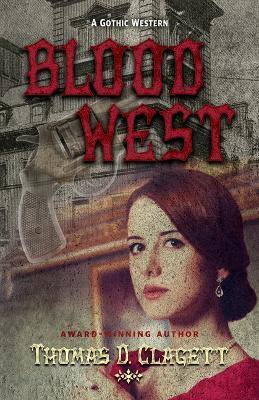
 Here’s my four star review of BLOOD WEST by THOMAS D. CLAGETT (published by Five Star Publishing.) You can find the review on Goodreads and Amazon.co.uk.


MY REVIEW:

Intriguing western-horror hybrid

Acclaimed, award-winning novelist THOMAS CLAGETT follows up his fine novel of the Alamo, ‘Line of Glory,’ with something completely different. ‘Blood West’ mixes the western with horror and the supernatural. It’s mostly set in a New Mexico town in 1885, where the changing West is represented by the appearance of telephones, electric lights and elevators. A female Pinkerton Detective works undercover, investigating a series of grisly killings. She soon suspects something neither wholly human nor animal is stalking the town as darkness falls. Could it even be a nightmare from the Old World visiting the New – a vampire? Clagett ratchets up the tension as the body count mounts and the writing is expert: ‘‘The same stars were ugly pockmarks in the blackness of a long, terrible night." Recommended.


Here’s my blog about Tom’s excellent Alamo novel LINE OF GLORY, which includes a review: https://andrewmcbrideauthor.blogspot.com/2019/03/author-favourites-line-of-glory-by.html


Here’s the BLURB for BLOOD WEST:

Summer, 1885. Something inexplicable has come to the railroad town of Las Vegas in the Territory of New Mexico. Asked to investigate, the Pinkerton Detective Agency sends their best detective. Her name is Hattie Lawton. But no one can know her true identity or why she has been sent, because, as Hattie knows well, no one can keep a secret. She poses as a nurse, hired to tend the consumptive patients staying at the Montezuma, the newest and grandest hotel in the famous Harvey House chain. Finding information proves difficult for Hattie. Deputy Sheriff Antonio Valdes resents her attempts. Father John Lanigan fears her, but something else frightens the priest even more: a creature that some people swear can change its shape—a creature that is afraid of nothing.

VAMPIRES

I plundered this information on vampires from Wikipedia. The subject matter encompasses everything from a South American bat, a 15th Century warlord, a gothic novel from the 1890s to a teenage Californian girl from the 1990s! This blog offers only the briefest look. It’s not intended to be remotely exhaustive, otherwise it would take 6 months to read!

IN FOLKLORE 

In folklore the vampire is an undead person rising from the grave after death, subsisting by feeding on the vital essence (generally the blood) of the living.

Tales of vampiric creatures have existed for millennia, in Mesopotamian, Hebrew, Ancient Greek, Roman and other cultures. Superstitious fears of the dead returning are evident, for example, in a 9th Century grave in Denmark, bearing ‘a grave binding inscription’ used to keep the deceased in its grave. The vampire's head, body, or clothes could be spiked and pinned to the earth to prevent rising. Below is a 13th century skeleton found in Bulgaria stabbed through the chest with an iron rod.


Romani people drove steel or iron needles into a corpse's heart and placed bits of steel in the mouth, over the eyes, ears and between the fingers at the time of burial. In Bulgaria over 100 skeletons with metal objects, such as plough bits, embedded in the torso have been discovered. Other means of keeping the dead in their graves included burying a corpse upside-down, or placing earthly objects, such as scythes or sickles, near the grave to satisfy any demons entering the body or to appease the corpse and keep it in its coffin.

Almost every culture has mention of blood-drinking demons. Creatures attempting to drink blood from men were depicted on shards of pottery excavated from ancient Persia. 

The term vampire was popularized in the early 18th Century when the local superstitions about these creatures in the Balkans and Eastern Europe were first widely reported in Western Europe. The belief in vampires spread dramatically across the continent, resulting in outbreaks of mass hysteria, corpses being staked or beheaded, people being accused of vampirism and even public executions. This hysteria, commonly referred to as the "18th-Century Vampire Controversy", raged for a generation. The word vampire (as vampyre) first appeared in English in 1732, in news reports about the vampire "epidemics" in Eastern Europe. The term was derived from the German Vampir.


During the late 18th and 19th centuries the belief in vampires spread across the world. In 1892 a 19-year old girl who died in Rhode Island was suspected of vampirism. Her father, assisted by the family physician, removed her from her tomb two months after her death, cut out her heart and burned it to ashes. It’s even survived into modern times: allegations of vampire attacks swept through Malawi during late 2002 and early 2003, with mobs stoning one person to death. And then in 2017 fear and violence recurred, when 6 people accused of being vampires were killed.

In the earlier traditions, before the 19th Century, vampires were usually described as bloated in appearance, and ruddy, purplish, or dark in colour; these characteristics were often attributed to the recent drinking of blood. They often wore shrouds. They were corpses who rose from their graves at night to suck the blood of the living, after which they returned to their cemeteries. The persons so sucked waned, grew pale, and fell into ill health, while the feeding corpses grew fat, rosy-cheeked, and enjoyed an excellent appetite. Evidence that a vampire was active in the area included the death of cattle and sheep as well as humans.

The origins of these traditions is sometimes ascribed to the ignorance of people in pre-industrial societies about how decomposition effects the body after death and their attempts to rationalize this. Rates of decomposition vary depending on temperature and soil composition. Corpses swell as gases from decomposition accumulate in the torso and the increased pressure forces blood to ooze from the nose and mouth. This causes the body to look plump, well-fed and "ruddy" - changes that are all the more striking if the person was pale or thin in life. Darkening of the skin is also caused by decomposition. So, it’s not surprising the pre-industrial man, seeing corpses dug up and looking healthier than they had been in life, suspected some demonic force was at work.

THE VAMPIRE TRANSFORMED BY LITERATURE

The image of the vampire was transformed in 1819 with the publication of the first prose fiction piece concerned with vampires: ‘The Vampyre.’ Initially credited to the poet LORD GEORGE BYRON, it was in reality authored by Byron's personal physician, JOHN POLIDORI. It was highly popular and influential. The vampire theme continued in ‘penny dreadful’ serial publications such as ‘Varney the Vampire’ (1847,) JOSEPH SHERIDAN LE FANU’s 1872 novel ‘Carmilla’ and the quintessential vampire novel, ‘Dracula’ by the Irish writer BRAM STOKER, published in 1897.


BRAM STOKER (1847-1912)

In the course of these 19th Century works of fiction the vampire morphed from a creature that had been plump and rosy-cheeked (or even purplish) to something usually tall, deathly-pale and gaunt, definitely not reflected in mirrors. Unlike the vampires of folklore they were vulnerable to, and hid from, sunlight. They sprouted fangs, while the trademark long black cloak didn’t appear until stage productions of the 1920s. Perhaps most notably, Bram Stoker gave his lead vampire a name – COUNT DRACULA – the persona (at least on the surface) of a charismatic, gentlemanly and sophisticated aristocrat, and the ability to turn into a bat.

VAMPIRE BATS

Vampire bats were integrated into vampire folklore after they were discovered on the South American mainland in the 16th century. A purely New World species, they had nothing to do with the vampires of folklore, who had existed long before the bats were discovered. The bats were named after the folkloric vampire rather than vice versa.


The vampire bat's bite is usually not harmful to a person, but the bat has been known to actively feed on humans and large prey such as cattle and often leaves the trademark, two-prong bite mark on its victim's skin. But vampires only transformed into bats for the first time in 1897, in Bram Stoker’s novel.

WHAT’S IN A NAME – COUNT DRACULA

VLAD THE IMPALER

The original COUNT DRACULA appears to be VLAD the THIRD (born c.1428), a ruler of Wallachia, the southern region of Romania. He is often considered one of the most important leaders in Wallachian history and is a national hero of Romania. Diplomatic reports in the 15th century referred to him as Dracula, Dracuglia, or Drakula.  Late in his life he signed two letters as "Dragulya" or "Drakulya". Dracula means "[the son] of Dracul (or the Dragon)". In modern Romanian, dracul means "the devil."


Vlad appears to have been a flesh-and-blood man who was more terrifying than any fictional vampire. Even by the standards of the brutal times in which he lived, he was noted for his cruelty. His propensity for impaling enemy prisoners earned him a nick-name that still chills down the centuries: ‘Vlad the Impaler.’ He died in mysterious, violent circumstances in 1476 or 1477.

Vlad seems to be guilty of many evils, but there’s no record vampirism was one of them. Apart from residing in the same country (Romania) he seems to have nothing in common with a late 19th Century sophisticated aristocrat who is also a vampire. So why did Bram Stoker choose to name his chief vampire after a ruthless 15th Century warlord?

Bram Stoker had researched vampire superstitions of Transylvania in Romania (even though Vlad was ruler of Wallachia, an adjoining province.) Stoker authorities say the author "apparently did not know much about" Vlad the Impaler, "certainly not enough for us to say that Vlad was the inspiration for" Count Dracula, and that any connection to Vlad is “tenuous.” Stoker's working papers for his book contain no references to Vlad. The name of the Dracula character in all drafts but the later ones is 'Count Wampyr'.

So why Count Dracula? We’ll never know. Viewing his decision as a fellow novelist, I think it’s quite likely Stoker just thought it was a great name and decided to use it, without knowing much about who the real Dracula was!

Since the success of this book the vampire has become a dominant figure in the horror genre, still popular in the 21st century, spawning books, films, TV shows, and video games.

There’s only time for the very briefest of looks at these depictions, they deserve a separate blog. Vampires in prose fiction include ANNE RICE's highly popular and influential ‘Vampire Chronicles’ books (1976-2003.) 

Film and television

Dracula is a major character in more films than anyone but SHERLOCK HOLMES. Many early films were either based on the novel Dracula or closely derived from it. These included the 1922 silent German Expressionist horror film ‘Nosferatu’ featuring the first film portrayal of Dracula.


‘Dracula’ (1931), starring BELA LUGOSI as the Count was the first talking film to portray Dracula.


Hammer Horror reincarnated Dracula in ‘Dracula’ in 1958, with CHRISTOPHER LEE as the Count and PETER CUSHING as his nemesis, vampire-hunter DR. VAN HELSING.


CHRISTOPHER LEE


PETER CUSHING

This hit movie spawned seven sequels, with Lee reprising the role in all but two of them. By the 1970s, vampires in films had diversified with works such as ‘Count Yorga, Vampire’ and an African Count in 1972's ‘Blacula.’ 


On TV 1972’s ‘Kolchak: The Night Stalker’ revolved around reporter Carl Kolchak hunting a vampire in Las Vegas. This led to a brief spin-off TV series.


DARREN McGAVIN as ‘Kolchak: The Night Stalker’

The film ‘Buffy the Vampire Slayer’ spawned a hit TV series of the same name, running 1997-2003. Buffy (portrayed by SARAH MICHELLE GELLAR) was a 16-year-old high school girl in California who had to interrupt her studies to dispose of the numerous vampires and demons infesting the area. Her adventures mixed excitement and comedy, managing to send up most of the clichés inherent in the genre along the way. 


Buffy and her vampire slayers

Out west vampires turn up out west as early as 1959 in CURSE OF THE UNDEAD.

And the Gorch Brothers of ‘Wild Bunch’ fame re-surface as cowboy vampires in the ‘Buffy’ episode ‘Bad Eggs.’


Other reviews of BLOOD WEST:

“A legendary, murderous monster on the loose, a town in fear for their lives, a posse of lawmen, and a lady Pinkerton agent are brought together in author Thomas Clagett’s riveting thriller, Blood West. Clagett’s remarkable ability to build tension and suspense had me on the edge of my seat until the last page.”

Find BLOOD WEST here: https://www.amazon.com/Blood-West-Thomas-D-Clagett/dp/1432892649/ref=sr_1_1?crid=3HLQ1QRCEZZ7H&keywords=blood+west+thomas+clagett&qid=1648542766&s=books&sprefix=blood+west+thomas+clagett%2Cstripbooks-intl-ship%2C117&sr=1-1

Thursday, 28 May 2020

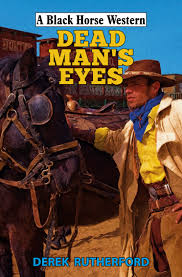
REVIEW of DEAD MAN’S EYES by DEREK RUTHERFORD

English author DEREK RUTHERFORD has produced a string of acclaimed westerns. That includes a trio featuring hero Jim Jackson - DEAD MAN’S EYES, DEAD MAN WALKING and DEAD MAN’S RETURN.


Here’s my 4 star REVIEW of DEAD MAN’S EYES:

Western mystery full of surprises.

Jim Jackson was once an outlaw, renowned for his skill with a gun. But Jim serves 10 brutalising years in a Texas prison for a murder he didn’t commit. Now he’s broken in spirit, his self-belief and courage gone, the town drunk of Parker’s Crossing, New Mexico. But a protection racket are putting the squeeze on the little settlement. Jim finds himself the unlikely defender of a community that despises him. He has to re-discover his lost courage and abilities…
Rutherford’s novel is both mystery and western; a slow-burner, dependant as much on character as action (so that when action erupts it’s that more effective) and involving a ghost town littered with deadly man-traps.
The writing has warmth and charm, the plot’s full of surprises, and Jackson’s a vulnerable, likeable hero on his torturous journey to redemption. Recommended.

Ghost towns have been a feature of the United States almost from the beginning. One of the earliest European settlements in the U.S., the British colony at Roanoke in North Carolina, was founded in 1585. According to Wikipedia, when it was visited by explorers including mapmaker JOHN WHITE in 1590 Roanoke was deserted. Its 112-121 inhabitants had vanished without trace. The word ‘CROATOAN’ was found carved into the palisade, which White interpreted to mean the colonists had relocated to nearby Croatoan Island.


Despite speculation that the colonists were massacred by Indians, there was no sign of battle or withdrawal under duress. There were no human remains or graves reported in the area, suggesting everyone left alive. Bizarrely, no thorough search was undertaken for them.


The Roanoke locality

Within 15 years reports surfaced of people with European features in Indian villages not too far away, but no hard evidence was produced. This might suggest the colonists, having left Roanoke for mysterious reasons, and feeling abandoned by Britain, simply assimilated with the local native tribes.


Native peoples of the Roanoke area c. 1590

However, there was a dramatic fate for the Zwaanendael Colony in Delaware. This became a ghost town when every single colonist was massacred by Indians in 1632. 
Most ghost towns came about through less violent means. Sometimes it was as simple as when a road or railroad line failed to follow an expected route or fell out of use. For example thousands of communities in the northern Great Plains states of Montana, Nebraska, North Dakota and South Dakota became ghost towns when a rail line failed to materialize. Hundreds of towns were abandoned when the Interstate highway system replaced the railroads as the favoured mode of travel.
Some unincorporated towns become ghost towns due to flooding caused by dam projects that create man–made lakes, such as Oketeyeconne in Georgia.
Many of the ghost towns that litter the deserts and mountains of the American West were originally ‘boomtowns’ that sprang up when minerals such as gold and silver were discovered nearby. But often the mineral wealth they were based on was soon dug out, or price collapses made them too expensive to continue as mining centres. Boomtowns often decreased in size as fast as they initially grew.
Old mining camps that boomed then went bust include Deadwood, South Dakota, Tombstone, Arizona and Virginia City, Montana. These still survive as active villages, towns and cities. Others – Bodie, California, Rhyolite, Nevada (the two images below)


and Vulture City, Arizona - exist only as abandoned buildings or standing ruins, bearing silent witness to vanished, or almost vanished,  populations, lonely testament to dreams lost and found.

Vulture City
Ghost towns have featured in many westerns, on both TV and film. Bad guy RICHARD WIDMARK has shoot-outs in them in both ‘Yellow Sky’ (1948)


and ‘The Law and Jake Wade’ (1958.) (below)


while RANDOLPH SCOTT and ROBERT RYAN (as a villainous and unhistorical Sundance Kid) stalk each other on the deserted streets of an abandoned town in ‘Return of the Bad men.’ (1948)


ROBERT RYAN in ‘Return of the Bad men.’


In ‘The Zanti Misfits,’ a memorable episode of the classic 1960s sci-fi show ‘The Outer Limits’ an Old West ghost town in the California desert – appropriately named Morgue - is overrun by some very nasty alien invaders: a horde of spiders that are highly intelligent, poisonous and homicidal!   


OTHER REVIEWS of DEAD MAN’S EYES:

‘'Wonderful! Even though I don't usually read Westerns, I absolutely loved it!’

‘A good story, well plotted with interesting characters and a rollicking pace… really well written too.’

‘Excellent… A great character-driven Western, plenty of surprises in an action-packed memorable tale. Will certainly look out for more from this author.’

You can find my review on Goodreads: https://www.goodreads.com/book/show/31299244-dead-man-s-eyes

And on Amazon.co.uk: https://www.amazon.co.uk/Dead-Mans-Black-Horse-Western-ebook/dp/B01I3I426I/ref=sr_1_1?dchild=1&keywords=dead+man%27s+eyes+derek+rutherford&qid=1590493240&sr=8-1

You can also find DEAD MAN’S EYES on Amazon.com: https://www.amazon.com/gp/product/B01I3I426I/ref=dbs_a_def_rwt_hsch_vapi_tkin_p1_i4

Wednesday, 6 November 2019

AUTHOR FAVOURITES: THE DEVIL DOESN’T WANT ME by ERIC BEETNER


Eric Beetner has been described as ‘the hardest working man in crime fiction.’ As well as numerous noirish thrillers and award-winning short fiction he’s ventured into western territory with the Lawyer series.

Eric tells me his favourite of his own books is THE DEVIL DOESN’T WANT ME. This is the first in a series of Lars-and-Shaine novels. ‘I think it’s the right blend of an antihero you root for, mayhem and violence, but with a real heart.’

Lars, a professional hit man, has been hunting Mitch the Snitch for 17 years. But then the aging gun for hire switches sides and ends up with Mitch’s teenage daughter Shaine, on the run from New Mexico to California. Angry mobsters and the FBI pursue.

Here’s some information about hit men, or contract killers, which I got via Wikipedia. (I didn’t want to delve any deeper in case I put my life at risk, which seems a high price to pay for writing a blog!)
Contract killing is where one party hires a killer (often called a hit man) or killers to murder a target individual or group of people. It does exist in the real world outside fiction. For example, in the United States, the gang MURDER, INC committed hundreds of murders on behalf of the NATIONAL CRIME SYNDICATE during the 1930s and 1940s.
A study by the Australian Institute of Criminology, looking at 162 attempted or actual contract murders in Australia between 1989 and 2002, indicated that the most common reason for murder-for-hire was insurance policies payouts. The study also found that the average payment for a 'hit' was $15,000 with variation from $5,000 up to $30,000. Contract killings accounted for 2% of murders in Australia during that time period. Contract killings also make up a relatively similar percentage of all killings elsewhere. For example, they made up about 5% of all murders in Scotland from 1993 to 2002.
Notable hit men include:
GLENNON ENGLEMAN, an American dentist who moonlighted as a hit man.
RICHARD KUKLINSKI, an American contract killer who claimed to have murdered over 200 men.
FRANK ‘THE IRISHMAN’ SHEERAN, a union official and mob hit man, who claimed he murdered former Teamsters president JIMMY HOFFA. 

BENJAMIN ‘BUGSY’ SIEGEL, who headed the BUGS and MEYER MOB  and was a hit man for MURDER, INC. Siegel was also the ITALIAN MOB’S main hit man during Prohibition. Ironically, he was himself the victim of a contract killing by unknown assailants in 1947. His murderers were hired by the American Mafia ruling body THE COMMISSION.

ILICH RAMÍREZ SÁNCHEZ, also known as CARLOS THE JACKAL, is more accurately a political assassin and terrorist than a crime-based hit man working solely for money. He’s a committed Marxist-Leninist who joined the POPULAR FRONT FOR THE LIBERATION OF PALESTINE (PFLP) in 1970. He was given the code name 'Carlos' because of his South American roots (he was born in Venezuela.) In a case of life imitating art, Carlos was dubbed ‘The Jackal’ by UK newspaper ‘The Guardian’ after one of its correspondents reportedly spotted FREDERICK FORSYTH’s novel ‘The Day of the Jackal’  (about a contract killer) near some of his belongings.

He is currently serving a life sentence in France for the 1975 murder of an informant for the French government and two French counter-intelligence agents. During his trial in 1997, he said, "We never killed anyone for money, but for a cause—the liberation of Palestine.” In 2017 he claimed responsibility for a total of 80 deaths.
The Brazilian television presenter WALLACE SOUZA was accused of hiring hit men to murder at least five people in 2009 to increase his show’s ratings!

Contract killers have proved endlessly fascinating to novelists and film makers. Ernest Hemingway’s short story ‘The Killers’ inspired two films of the same name:
In 1946, with the hit men played by Charles McGraw and William Conrad.


And in 1964 with  Clu Gulager and Lee Marvin in the same roles.


FREDERICK FORSYTH’s aforementioned novel ‘The Day of the Jackal’ was made into a movie in 1973 with Edward Fox as the paid killer.


Other films about hit men include PULP FICTION (a very over-praised movie in my opinion) with Samuel L. Jackson and John Travolta


and MR AND MRS SMITH with Angelina Jolie and Brad Pitt as a married couple unaware that their partner is a hired killer – and that they've been hired to kill each other!


And ROAD TO PERDITION (2002) with Jude Law as the assassin.


Reviews of THE DEVIL DOESN’T WANT ME:

‘Beetner is a maestro with his action scenes.’

‘Sizzling cinematic prose… crime fiction at its most entertaining… marks the arrival of a bold new talent.’

‘Has more depth than your typical hitman/mob shoot-em-up.’

‘Laced with dark humour.’

‘A true noir masterpiece.’


Thursday, 2 May 2019

AUTHOR FAVOURITES: KILLER OF WITCHES by W. MICHAEL FARMER


W. Michael Farmer tells me KILLER OF WITCHES is probably his best work to date. It’s a Native American epic told first person by Yellow Boy, who we first meet as a 5 year old, one of the Mescalero Apaches fleeing their New Mexico reservation in 1865, and follow into manhood.

KILLER OF WITCHES mixes historical-based adventure with the supernatural. The Apache God Ussen, Creator of Life, gives to the boy gifts of power that include an ability to slay witches. Yellow Boy uses his gifts in his search for a witch called Blood of the Devil, whose head looks like a skull, and whose body is covered with black spiral and flame tattoos.


An Apache witch-woman

The Mescalero Apaches, ranging from central New Mexico to the Texas Big Bend and deep into northern Mexico, had elements of both the western (wickiup-dwelling, desert-living) Apaches and Plains (tipi-dwelling, buffalo-hunting) Indians in their culture.


They ate the roasted fruit of the mescal plant, and made liquor from it, which is why Spanish colonists named them the Mescaleros.


During the American Civil War the union army under GENERAL JAMES CARLETON fought against the Mescaleros.


His most effective field commander was KIT CARSON, the legendary mountain man and trail-blazer, who helped defeat them and corral them on the bleak Bosque Redondo Reservation – from which they fled, (as depicted at the beginning of KILLER OF WITCHES.) Some Mescaleros remained at large until the early 1880s.


KIT CARSON (1809 - 1868)

REVIEWS of KILLER OF WITCHES:

‘Michael Farmer gives voice to a new American hero - Yellow Boy, an Apache warrior whose riveting story from boyhood to manhood is fresh, passionate, and totally believable. With deep sensitivity and understanding of Apache culture, Farmer presents Yellow Boy, his family, and friends in all their rich, multidimensional complexity. What a pleasure to read a book from a Native American hero's perspective… Vivid details transport the reader to the novel's southwest setting.’

‘The characters are well-drawn and believable.’

‘A true joy.’

‘Wonderful read! Fascinating presentation of this story from the Apache point of view… Enjoyed this book immensely.’

‘Great read! I don't read historical fiction very often, but I loved every minute of this book.’

‘The history never overwhelms the story, and there was never a dull moment as the story built toward a satisfying conclusion.’

‘Terrific read. Very interesting and suspenseful.’