I recently produced a 25 ESSENTIAL WESTERNS blog. There I took on the foolhardy task of compiling a list of ESSENTIAL westerns, movies you just have to see to appreciate the western at its best, at its most ground-breaking, and touching the main western bases. Films featuring the key western actors and directors. Find it here: https://andrewmcbrideauthor.blogspot.com/2020/09/25-essential-western-movies.html
I’ve decided to supplement this list with a further
25 WESTERNS TO ENJOY, movies that aren’t ground-breaking or innovative but show
the western at its most entertaining. Some of these films have considerable
artistic merit and/or thought-provoking elements, such as a debate on the
validity or otherwise of violence/ the treatment of the Native Americans etc.,
issues the western has often addressed. Others are simply good shoot ’em up fun
to keep a viewer entertained for a couple of hours. A few might be described as
‘guilty pleasures,’ personal favourites that I seem to be in a minority in
enjoying. So not all of the following films are great, or classic, but all have
given me plenty of enjoyment.
This isn’t
anything like a complete list and I could have included more. I decided to stop at 25, for no particular reason, or I’d be writing the world’s longest blog.
Between my ESSENTIAL westerns blog and this one, there’s hopefully enough to introduce someone new to westerns
to the genre, to help them ‘get’ westerns – and have a good time doing it. If a
favourite movie of yours isn’t here, it may be because it’s already appeared on
my ESSENTIAL list. The films listed there are: THE COWBOYS, FORT APACHE, THE GUNFIGHTER, HOMBRE, JESSE JAMES, THE
LEFT-HANDED GUN, LITTLE BIG MAN, A MAN CALLED HORSE, MY DARLING CLEMENTINE, THE
NAKED SPUR, THE OX-BOW INCIDENT, RED RIVER, RIDE THE HIGH COUNTRY, RIO BRAVO, THE
SEARCHERS, SHANE, THE SHOOTIST, STAGECOACH, THE TALL T., 3.10 TO YUMA, UNFORGIVEN,
VERA CRUZ, WAGON MASTER, THE WILD BUNCH, WILL PENNY, BAD DAY AT BLACK ROCK and
LONELY ARE THE BRAVE.
Because
I’m expressing my opinions throughout, I decided to forgo the use of phrases
like ‘in my view’ or IMHO as I’d be repeating them endlessly.
Films are
listed in alphabetical order, not in any order of merit.
THE BIG COUNTRY (1958)
Easterner
GREGORY PECK gets a rough ride from the locals when he arrives on the cattle
ranges of Texas, and then gets caught up in a private war between two rival
ranchers. Big-scale, intelligent western with a great theme tune by JEROME
MAROSS. BURL IVES steals every scene he’s in as one of the warring ranchers,
winning an Oscar in the process.

BUTCH CASSIDY AND THE SUNDANCE
KID (1969)
I really
enjoyed this movie when it first came out, but I’ve gone off it somewhat over
the years. The script feels a little anachronistic and the two leads come over
as men of the 1960s, not the 1890s. I also find the ‘Raindrops keep falling on
my head’ sequence a bit cloying. Having said that, there’s plenty of wit in the
script, the ‘chase’ sequence is very well done and visually striking and
there’s a tremendous shoot-out at the end.

THE COMANCHEROS (1961)
In ‘The John Wayne Scrapbook’ Lee Pfeiffer writes: ‘The Comancheros isn’t often discussed as a masterpiece, and perhaps it isn’t. However, it would be difficult to find a western that is more enjoyable to watch.’ That about sums up this cheerful, zestful ride. JOHN WAYNE shades into James Bond territory as a Texas Ranger who goes undercover to break up a gang in league with hostile Indians. Great fun, and Wayne has tremendous chemistry with co-star STUART WHITMAN and villain LEE MARVIN.

CUSTER OF THE WEST (1967)
I seem to
be in a small, select band in my admiration for this action-packed western,
with plenty of Cinerama spectacle. English actor ROBERT SHAW was unlikely
casting as the ‘boy General’ but gives a typically powerful performance as a
conflicted, driven man.

FLAMING
STAR (1960)
Another
artistic success for DON SIEGEL who rose in stature as a director through the
50s. Helped by a taut script, based on a CLAIR HUFFAKER novel, Siegel manages
to get a good performance out of his star, ELVIS PRESLEY, in a serious, mostly
non-singing role. Presley is supported by an able cast including STEVE FORREST and
JOHN McINTIRE. The film mixes tough action with some sympathy for Native
Americans.

FORT MASSACRE (1958)
Largely
unknown U.S. Cavalry versus Indians western, with JOEL McCREA playing against
type as a soldier whose hatred of Apaches drives him to destruction in harsh
desert surroundings. Notable for the visceral (for its time) action scenes.

THE GREAT NORTHFIELD MINNESOTA RAID (1972)
The best movie on JESSE JAMES - just called 'JESSE JAMES' (1939) - is on my essential list. THE GREAT NORTHFIELD MINNESOTA RAID makes an interesting contrast, as both movies reflect the times when they were made. NORTHFIELD is very much of the 'revisionist' era and takes a cynical, blackly comic look at this famous outlaw and his associates. The film postulates that COLE YOUNGER (played by CLIFF ROBERTSON) was the real 'brains' behind the James/Younger gang. It also breaks the mould in having an actor play Jess - ROBERT DUVALL - who actually looks like him!

GUNFIGHT AT THE OK CORRAL (1957)
One of several enjoyable takes on the story of WYATT EARP, which also includes HOUR OF THE GUN (1967) and the fictionalisation WARLOCK (1959.) Lacking
the beauty and artistry of the best of these - JOHN FORD’s ‘My
Darling Clementine,’ - but a good example of the well-made traditional
western, chronicling the events leading up to the fabled gunfight. KIRK DOUGLAS
gets my vote for best screen DOC HOLLIDAY in his portrayal of the tortured,
self-destructive dentist-turned-gun man.

GUNMAN’S WALK (1958)
One of
those quiet, below-the-radar movies that made the 50s a golden age for western
film. A strong debate on the morality of violence underpins this tale of a
rancher (a typically intense performance by VAN HEFLIN) and his two sons as
they come into manhood.

THE MAGNIFICENT SEVEN (1960)
This film is tremendously popular and any criticism of it I make is going to arouse the ire of western movie fans. But I’m going to risk it anyway. One reason I think ‘Magnificent’ is ‘good not great’ is that I saw it after seeing ‘The Seven Samurai,’ the Japanese masterpiece directed by AKIRA KUROSAWA. ‘Samurai’ is such a staggeringly brilliant film it eclipses any follow-up.

SEVEN SAMURAI (1954)
Further, I’d quibble with some of the casting in ‘Magnificent’; I’ve never really bought ROBERT VAUGHN in westerns, and I don’t think YUL BRYNNER, BRAD DEXTER and (particularly) HORST BUCHHOLZ are well cast. On the plus side you have solid work from STEVE McQUEEN and JAMES COBURN, CHARLES BRONSON and ELI WALLACH are both outstanding in their roles, there’s some memorable dialogue (‘We deal in lead, friend’) and good action scenes. Topped off by one of the greatest scores – written by ELMER BERNSTEIN - in western movies.

ONE-EYED JACKS (1961)
Based
loosely on CHARLES NEIDER’s great novel ‘The
Authentic Death of Hendry Jones’ – which is a fictionalisation of the life
of BILLY THE KID. MARLON BRANDO directed and starred, getting strong
performances out of KARL MALDEN, SLIM PICKENS and BEN JOHNSON, all playing
villains. Set in an unusual location for westerns – the Pacific coast of
California.

THE OUTLAW JOSEY WALES (1976)
CLINT EASTWOOD directed and starred in this 'revisionist' western about a loner fighting the American Civil War long after it's ended. Maybe it rambles on too long, and Eastwood is too super-human to fully engage with, but there's much for western aficionados to enjoy, from the visual splendour of the landscapes to the laconic dialogue leavened with black humour and the punchy action scenes.

PILLARS OF THE SKY (1956)
The U.S. Cavalry and Indians clash in 1868 Oregon. Part of the 1950s cycle of sympathetic-to-Native Americans movies that included BROKEN ARROW, APACHE, DEVIL'S DOORWAY, SMOKE SIGNAL and WHITE FEATHER, any of which might have made this list. A highlight is the excellent running-fight battle sequence.
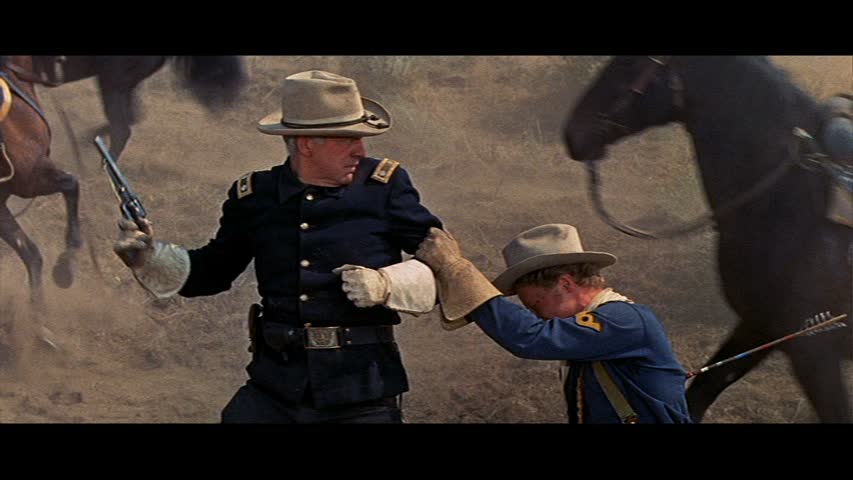
RIDE LONESOME (1959)
I’d rate
‘The Tall T’ the best of the quality
westerns RANDOLPH SCOTT made with director BUD BOETTICHER, but this
comes second. A small-scale production about a handful of characters crossing a
hostile wilderness, and all the better for its tautness and simplicity.

RUN OF THE ARROW (1957)
Long before 'Dances with Wolves' there was this film, written and directed by SAMUEL FULLER, about a white man so alienated from white society he prefers to live with the Sioux. An unusual and original take on Native American society, although it's never explained why southern-born ex-Confederate ROD STEIGER has an Irish accent! STEIGER sometimes hams it up, but that's counter-balanced by effective underplaying by BRIAN KEITH, RALPH MEEKER and CHARLES BRONSON (as a Sioux chief.)

THE SCALPHUNTERS (1968)
BURT
LANCASTER sends himself up as a rough-hewn fur trapper partnering a black slave
(OSSIE DAVIS) - who turns out to be a much brighter and more sophisticated man.
They pursue a ruthless gang led by TELLY SAVALAS in an enjoyable, energetic,
comedy-western romp.

SHE WORE A YELLOW RIBBON (1949)
My
favourite of the acclaimed’ cavalry trilogy’ director JOHN FORD made with JOHN
WAYNE is ‘Fort Apache,’ but this
instalment also has many strengths, from WINSTON HOCH’s Oscar-winning colour
photography to John Wayne’s wonderful performance as a man much older than his
actual years.

THESE THOUSAND HILLS (1959)
The great
western novelist A. B. GUTHRIE JR. felt this was the best film adaption of his
work. If you ignore the syrupy theme tune and the slightly sanitised look, this
is an authentic take on life on the cattle ranges of 1880s Montana. With a bit more grittiness
it might have approached Shane-level greatness.

A THUNDER OF DRUMS (1961)
An
under-appreciated western about a remote U.S. cavalry outpost. Some of the
younger actors – GEORGE HAMILTON, RICHARD CHAMBERLAIN – are a little bland and
modern-seeming, but RICHARD BOONE holds it together as the tense, hard-bitten
commanding officer, displaying what one critic called ‘craggy nobility.’ The
film climaxes with Boone and his troops pursuing raiding Apaches into
stunningly-photographed Arizona locations.

TRIBUTE TO A BAD MAN (1956)
Late
in his career, JAMES CAGNEY made a few westerns. This gritty tale, based on a JACK
SCHAEFER story, deals with the very real Old West issue of lynching. Cagney
gives a fine performance as a rancher with ‘hanging fever.’ There’s excellent
support from IRENE PAPAS and STEPHEN McNALLY, strong location photography and
an authentic take on the bleak lives cowboys often lived. One caveat: I don’t
like the title!

TRUE GRIT (1969)
JOHN
WAYNE finally picked up an Oscar (which he should have won 20 years earlier for
‘She Wore a Yellow Ribbon’ or ‘Red River’) with his roistering
performance as wayward lawman Rooster Cogburn. Cogburn’s character switches
from rascally to clownish to heroic, an acting challenge Wayne more than meets,
and he gets strong support from KIM DARBY and ROBERT DUVALL.

VALDEZ IS COMING (1971)
A gritty,
action-packed western from the ‘revisionist’ era, this movie is based on an ELMORE
LEONARD novel. BURT LANCASTER plays Bob Valdez, a despised Mexican lawman pursued
through desert and mountains by a rancher and his private army. At which point
we – and the pursuers, to their cost – discover Valdez has wilderness skills honed
scouting against the Apaches, and that he’s a one-man fighting and killing
machine.
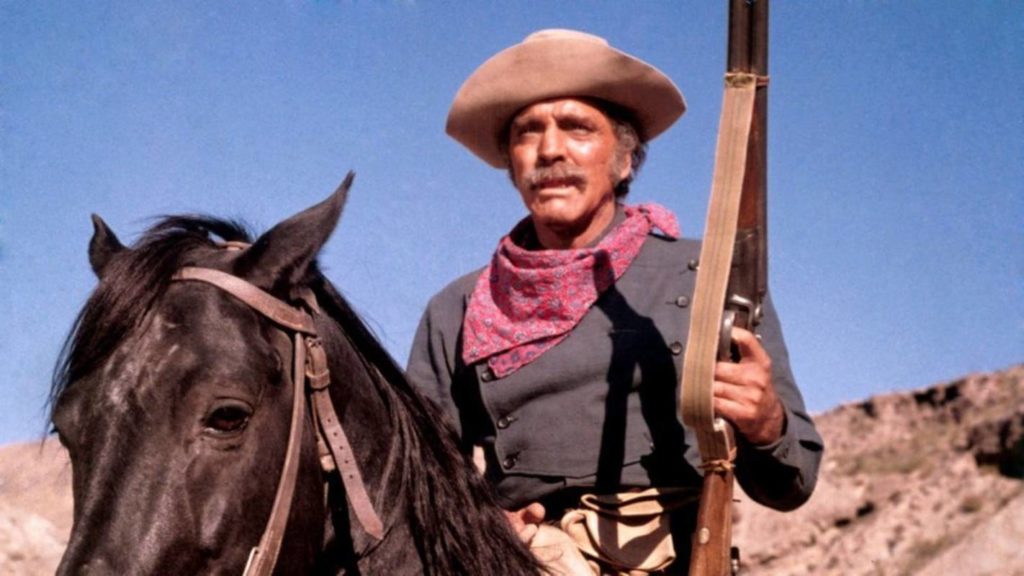
THE WESTERNER (1940)
WALTER BRENNAN won an Oscar playing 'JUDGE' ROY BEAN, likable one minute, treacherous and villainous the
next. He's pursued by his friend/enemy GARY COOPER in a lyrical, folksy tale leavened with plenty of black humour. .

WESTERN UNION (1941)
Epic-scale production about the laying of the transcontinental telegraph line
across the west. ROBERT YOUNG and RANDOLPH SCOTT vie for the same girl, while
dealing with renegade whites and Indians. There’s top-notch location photography,
script and performances, and strong period detail.

WINCHESTER 73 (1950)
JAMES
STEWART believed switching to westerns rescued his film career. Formerly known
as a likable light-touch actor in contemporary dramas and comedies, he toughened
up his image considerably in this cracking adventure about men in obsessive
pursuit of a ‘one-in-a-thousand Winchester.’ The first of a string of fine
westerns Stewart made with director ANTHONY MANN, where the character Stewart
portrayed was often motivated, sometimes neurotically, by revenge. Strong
support from SHELLEY WINTERS and DAN DURYEA as a ‘laughing villain.’

As with
my ESSENTIAL list, there were no ‘Spaghetti Westerns’ included here. Without
wanting to sound too high-brow about it, I find them entertaining but lacking
in depth. THE GOOD, THE BAD AND THE UGLY is the only one I considered. And
again no recent westerns feature. My ESSENTIAL list featured none made after
1992, and the most recent one on this list was made in 1976! These are all from
the ‘classic western’ period, which I would define as 1939 - 1976. I find it a
bit depressing that modern film makers can’t seem to make a great western any
more. I’d be delighted for some of them to prove me wrong!
As I
said, these are just my opinions. Feel free to disagree – as long as we keep it
civil!


