Thursday, 28 March 2019

AUTHOR FAVOURITES: REBEL RUN by JACK GILES


Ray Foster, who writes westerns as JACK GILES, tells me a favourite of his own novels is REBEL RUN.

This is more an ‘eastern’ than a western, as the location is the ‘Island,’ a POW camp in the eastern states where Confederate Prisoners are held during the American Civil War. This is Ray delving into POW escape territory, not surprising given two of his favourite books are Pat Reid's 'The Colditz Story' and Charles McCormac's 'You'll Die In Singapore.'

In REBEL RUN Confederate artilleryman Van Essen masterminds the escape, which involves a death-defying race down river rapids; but this is only the beginning of the dangers the escapees will face as they attempt to break through the enemy lines and rejoin the Confederate Army.
Ray is rightly proud of the research that went into the novel, conducted prior to the age of Google. Some Civil War POW camps acquired a grim reputation for inhuman conditions. During a period of 14 months, 28% of the Union prisoners held at Camp Sumter, near Andersonville, Georgia died.


The infamous Andersonville Prison Camp

At Camp Douglas in Chicago, 10% of its Confederate prisoners died during one cold winter month;


Confederate prisoners at Camp Douglas

and the death rate of 25% at Elmira Prison in New York State very nearly equalled that of Andersonville.

In total about 56,000 soldiers died in prisons during the war, accounting for almost 10% of all Civil War fatalities.

Various movies have been set or part-set in Civil War prison camps: MAJOR DUNDEE,


BEN JOHNSON, RICHARD HARRIS and WARREN OATES in Major Dundee (1965)

TWO FLAGS WEST


JOSEPH COTTEN and ARTHUR HUNNICUTT in ‘Two Flags West’ (1950)

and a particular favourite of mine - THE RAID (1954.)


VAN HEFLIN, PETER GRAVES and LEE MARVIN in ‘The Raid’ (1954)

Not forgetting MYSTERIOUS ISLAND!


Mysterious Island (1961)


Reviews of REBEL RUN:

‘A brilliantly told and well-researched story that kept me hooked to the last page.'

‘…Great, a prison break story and a chase. Action packed, with really good interesting characters.'

and

Thursday, 14 March 2019

AUTHOR FAVOURITES: VAMPIRE SIEGE AT RIO MUERTO by JOHN WHALEN


Alongside film reviewing John Whalen (writing as John M. Whalen) is the author of ‘hybrid’ novels where the western meets the future, or the cowboy hero is just as likely to encounter vampires or monsters as regular bad guys.

One of his favourites of his own novels is VAMPIRE SIEGE AT RIO MUERTO.

John tells me bounty hunter Mordecai Slate is modelled on the characters LEE VAN CLEEF played in movies like FOR A FEW DOLLARS MORE. Except, as Mordecai states: ‘Hunting monsters is my business.’


A New Mexican ranchero hires Slate to track down the vampire who ravished his daughter. Don Pedro Sanchez wants Kord Manion brought back alive, so he can drive in the stake himself.

Slate captures his prey and comes up with an unusual way to transport him back to Sanchez. Kord’s brother, Dax, and his gang of vampire outlaws pursue. During the chase, Slate rescues a girl and has to get her out of harm’s way.

The climax in a desert ghost town, Rio Muerto, is like THE WILD BUNCH with the addition of vampires!


WILLIAM HOLDEN in ‘The Wild Bunch’ (1969)

Vampires turn up out west as early as 1959 in CURSE OF THE UNDEAD.


‘Curse of the Undead’ (1959)

The Gorch Brothers of ‘Wild Bunch’ fame re-surface as vampires on TV in the ‘BUFFY THE VAMPIRE SLAYER’ episode ‘Bad Eggs.’


A ghost town shoot-out reminded me of western movies YELLOW SKY (1948)


and THE LAW AND JAKE WADE (1958)


RICHARD WIDMARK in ‘The Law and Jake Wade’

And aliens (spiders this time) also assault a ghost town in the classic ‘OUTER LIMITS’ episode ‘The Zanti Misfits.’


Reviews of RIO MUERTO:

‘As weird westerns go, this one is an instant classic…. If you're a fan of spaghetti westerns or Hammer horror films, this book is for you.’
‘A dandy yarn, a Western-horror mashup that could shoulder up to Stephen King and Louis L’Amour with equal comfort, and yet maintain stature as a creature all its own… Whalen doesn’t drop the reins of either genre: There are gunfights and fangs, wagons and coffins, townfolk and bloody necks, and one fast-paced tale that doesn’t turn in directions the reader might expect.’
‘A rip-roaring tale to be sure and - as usual - something more. …the author achieves yet a new pinnacle of genre-bending suspense…his cagey knack for fleshing out characters that may at first seem cliche is especially notable…. the novel rolls out like a particularly gripping film.'
Find it here:

Thursday, 7 March 2019

AUTHOR FAVOURITES: LINE OF GLORY by THOMAS CLAGETT


Award-winning author Thomas Clagett tells me his favourite of his own novels is LINE OF GLORY.


Here’s my 4 star review of LINE OF GLORY, which I put on Amazon.co.uk and Goodreads:

Author’s audacious approach gives us a fresh take on the Alamo

Almost as soon as the smoke cleared from the Alamo battlefield another fog shrouded the scene – that of legend.


The ruins of The Alamo in 1844

In the nearly two centuries since historians have argued over almost every single aspect of what may have occurred there in early 1836, when fabled heroes – Davy Crockett, Jim Bowie and William Travis – and a handful of Texans gathered to stand against Santa Anna’s mighty Mexican army and a 13-day siege ensued.


President-General ANTONIO LOPEZ de SANTA ANNA

Numerous novels, TV shows and movies on these extraordinary events have, for the most part, only fuelled the confusion and controversy. So I was sceptical that any further re-telling could add anything new.


DAVID (DAVY) CROCKETT in 1834

Happily I was wrong. Thomas Clagett’s audacious approach brings a fresh twist to the tale.

For a start he doesn’t attempt to tell the story of the Texas War of Independence, or even the whole siege. Instead he concentrates on the last 13 hours – the evening of March 5 and the morning of March 6 1836.


JAMES BOWIE

We get an intense focus on the ‘lull before the storm’ and then on the storm itself, as the Mexican army launches its final bloody assault on the Alamo. And bravely he chooses to tell the story through the eyes of less-famous participants: Susannah Dickinson, wife of an Alamo defender, three brothers among the garrison and a Mexican officer leading his troops against them. The ‘big three’ – Crockett, Bowie and Travis – become supporting players. In this way, Clagett humanises the story, without in any way trivialising or diminishing it, or belittling the participants (on both sides.)


WILLIAM TRAVIS in 1835

This is still an epic of courage and sacrifice, of heroism without false heroics. Clagett expertly captures the tension of men waiting to face death, and then the high drama of them giving and receiving it in the battle that consumes them. Highly recommended.  


SUSANNAH DICKINSON

Other reviews of LINE OF GLORY:

‘Gripping… Rousing and memorable.’

‘Excellent. Superb. Spellbinding.’

‘Vivid and authentic.’


Robert Onderdonk’s ‘Fall of the Alamo’ 1903

Find my reviews here: (Amazon.co.uk) 
(Goodreads)

You can also find LINE OF GLORY here:

Thursday, 28 February 2019

AUTHOR FAVOURITES: SHADOW SOLDIER by C. K. CRIGGER


Carol Crigger writes westerns, mysteries and sci-fi/fantasy novels. She’s a 2-time Spur Award finalist, and winner of the EPIC Award in the Western/Historical category.

She tells me a favourite of her own novels is SHADOW SOLDIER, (credited to C.K. Crigger) 2nd in her GUNSMITH TIME-TRAVEL series. Gunsmith BOOTHENAY IRONS has the power to travel back in time and experience the history held within an antique gun. But the 1911 Colt .45 Automatic she acquires has a mysterious power of its own.


It’s Boothenay's fiancé, Caleb, who’s accidentally transported back to World War I. Boothenay must travel back in time to rescue him, on the way encountering a mysterious old man whose power is equal to her own.


According to Wikipedia time travel features in ancient Hindu, Buddhist and Jewish mythology. In Hindu mythology, 'The Mahabharata' mentions King Raivata Kakudmi transported far into the future. The Japanese tale of ‘Urashima Taro,’ dating from 720 A.D. tells of a young fisherman who visits an undersea palace. After three days, he returns home to his village and finds himself 300 years in the future, where he has been forgotten, his house is in ruins, and his family has died.
A contender for the earliest time travel science fiction story is ‘Memoirs of the Twentieth Century’ (1733) by SAMUEL MADDEN where British ambassadors in 1997 and 1998 correspond with diplomats of the then-present day, conveying the political and religious conditions presumed to exist in the future.
Sleep transports characters through time in ‘Rip Van Winkle’ by WASHINGTON IRVING (1819) and ‘A Connecticut Yankee at King Arthur’s Court’ by MARK TWAIN (1889.)
One of the first stories to feature time travel by means of a machine is ‘The Clock that Went Backwards’ by EDWARD PAGE MITCHELL, which appeared in the ‘New York Sun’ in 1881. An unusual clock, when wound, runs backwards and transports people nearby back in time. H. G. WELLS’s ‘The Time Machine’ (1895) popularized the concept of time travel by mechanical means.
Time travel has featured in too many movies to list, from A CONNECTICUT YANKEE AT KING ARTHUR’S COURT (a musical based on the Mark Twain novel) to several versions of THE TIME MACHINE to THE TERMINATOR. Not to mention the BACK TO THE FUTURE series, PLANET OF THE APES etc…


ROD TAYLOR in ‘The Time Machine’ (1960)

I’m a big fan of 60s TV which produced at least three time-travel gems I’m aware of, two from STAR TREK:
‘The City on the Edge of Forever’ (often voted the best ever episode)


JOAN COLLINS and WILLIAM SHATNER in The City on the Edge of Forever’

and – Carol might appreciate this, given the gun-theme of SHADOW SOLDIER – ‘Spectre of the Gun’ where the crew of 'The Enterprise' find themselves caught in the middle of the Gunfight at the OK Corral;


and the brilliant OUTER LIMITS episode ‘The Man who was Never Born’ from 1963.


SHIRLEY KIGHT and MARTIN LANDAU in ‘The Man who was Never Born’

1963 also saw the launch of the British TV series DR WHO, featuring a time-travelling doctor, which is still running today.


WILLIAM HARTNELL as the first DR. WHO


Reviews of SHADOW SOLDIER:
‘C. K. Crigger's second story about Boothenay Irons, time tripping gunsmith extraordinaire, is just as exciting as the first. This book defies categorization. Fantasy? Yes. Romance? Yes. Historical novel? Yes. Action novel? Yes. Damned good read? You betcha. Will I be reading more C. K. Crigger stories? Absolutely!’

‘I would recommend this author to anyone.’


Thursday, 21 February 2019

AUTHOR FAVOURITES: FOUR FURLONGS by CAROL CRIGGER


Carol Crigger writes westerns, mysteries and sci-fi/fantasy novels. She’s a 2-time Spur Award finalist, and winner of the EPIC Award in the Western/Historical category.

She tells me a favourite of her own novels is FOUR FURLONGS (written as CAROL WRIGHT KRIGGER) part of her CHINA BOHANNON series.

China works as a bookkeeper for her uncle’s detective agency in Spokane, Washington c. 1900. But when an abused teenager brings her a tale about a murdered brother and a race horse being mistreated, China turns detective herself, plunging into danger in Spokane’s seamy underbelly.

Here’s KATE WARNE, the first female detective we have record of.


Born in New York State in 1833, she went to ALAN PINKERTON, head of the Pinkerton Detective Agency in 1856 to ask for a job as a detective. Pinkerton said "It is not the custom to employ women detectives!" Kate argued that women could be "most useful in worming out secrets in many places which would be impossible for a male detective… Woman would be able to befriend the wives and girlfriends of suspected criminals and gain their confidence… Men become braggarts when they are around women who encourage them to boast." Pinkerton took her on. By 1860, he was so impressed by her abilities he placed Warne in charge of his new Female Detective Bureau.
Pinkerton described her as: ‘[a] commanding person, with clear cut, expressive features ... a slender, brown-haired woman, graceful in her movements and self-possessed.’


Her most famous role was in the so-called ‘Baltimore Plot’ in February 1861, just before the outbreak of the American Civil War. Warne posed as a rich southern lady visiting Baltimore in order to infiltrate social gatherings of secessionist sympathisers. She discovered there was a plot to assassinate President-elect ABRAHAM LINCOLN as his train passed through Baltimore. To escape, Lincoln was forced to disguise himself as an invalid. Kate posed as his brother and helped smuggle him off the train before the assassins struck.  It is said that Kate Warne didn’t sleep while providing a bodyguard role for Lincoln, thus inspiring the Pinkertons motto: ‘we never sleep.'


ALAN PINKERTON with PRESIDENT ABRAHAM LINCOLN
Kate continued working as a Pinkerton Detective throughout and after the Civil War. In investigating the attempted murder of a CAPTAIN SUMNER and a MRS. PATTMORE, she disguised herself as a fortune teller.
Pinkerton named Kate Warne one of the five best detectives that he had. But her career was cut short at the age of 34 or 35 when, in 1868, she died of ‘congestion of the lungs.’
Kate was played by MARTHA MaCISAAC in the Canadian TV series ‘The Pinkertons.’


The character played by KATHERINE WARREN in the excellent train-bound 1951 thriller ‘The Tall Target’ (about ‘The Baltimore Plot’) is clearly based on Kate Warne.


Reviews of FOUR FURLONGS:

‘Crigger has created an enchanting heroine in China, with just the right amount of courage and vulnerability. Four Furlongs is enjoyable action mystery.’

‘Excellent exciting suspense western.’

‘Great summer read… A delightful period mystery with a charming main character.’

‘A rollicking and absorbing mystery… It's a giddy ride from beginning to end... I was delighted to find a mystery that afforded genuine suspense, laughs, and an authentic setting.'

Thursday, 14 February 2019

AUTHOR FAVOURITES: MANHUNTER’S MOUNTAIN by WAYNE D. DUNDEE


You can’t pigeon-hole Wayne D. Dundee! He writes westerns (winning a Peacemaker award), mysteries (nominated for numerous awards), crime novels, a novel about vampires, a boxing-meets-the-underworld novel…

Of his westerns he tells me he likes MANHUNTER’S MOUNTAIN, the first novel he did featuring DAVID CRANMER's popular CASH LARAMIE character, a book ‘where I think I came close to capturing almost exactly what I set out to do.’

U.S. Marshal Cash Laramie makes his way down the side of a mountain with a prisoner in tow, and two prostitutes eager to escape a mining town that's gone bust. But potential dangers pile up for Cash: nature providing an early winter storm and a rabid wolf; Mankind a gang of angry townsfolk eager to keep the prostitutes in town at any cost, and a ruthless bounty hunter dogging the lawman’s trail.

Here’s a real mountain mining camp, Leadville, Colorado, in 1885.


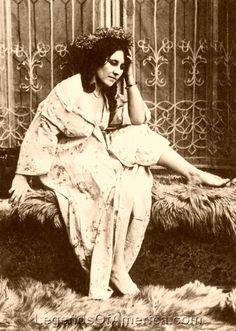
 And some real prostitutes of the period.


 Findings of gold, silver and other minerals played an enormous part in speeding the settlement of the American West. Strikes of mineral riches not only encouraged the mass migration of the California Gold Rush but brought settlers to remote and inhospitable areas like Nevada, Colorado, Montana and Arizona that might only have been sparsely populated otherwise. How would the history of the Old West been different without JAMES W. MARSHALL, WILLIAM RUSSELL, SAM BATES, HENRY COMSTOCK, JOHN WHITE or ED SCHIEFFELIN?

These weren’t in all cases the first people to find mineral wealth in the areas they prospected but they were the ones who acted on it, and are most associated with those strikes.

JAMES W. MARSHALL was 37 years old on January 24 1848, a foreman working for California pioneer John Sutter. On that day he found traces of gold in the tailrace of a lumber mill he was building for Sutter on the American River.

In 1848 any gold rush was limited to people in California and the Pacific coast area of the U. S. A. In 1849 the word had spread and ‘the world rushed in.’ An estimated 300,000 people came to California by land and sea, creating a new state of California within a year and blazing trails across the interior of the western United States that were the basic arteries of future settlement. But Marshall himself didn’t profit from his discovery and died penniless.


James Marshall

Some of the prospectors who swarmed over California began to range eastward into what was then almost virgin territory

WILLIAM 'GREEN' RUSSELL had rushed to California but by 1858 was prospecting in what is now Colorado. In the first week of July Russell and SAM BATES found a small placer deposit near the mouth of Little Dry Creek, the first significant gold discovery in the Rocky Mountains. This sparked off the Pike's Peak Gold Rush. The rush brought a significant population to the area for the first time and created mining camps such as Denver and Boulder that would develop into cities.

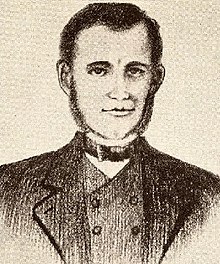
Canadian HENRY COMSTOCK is only one of several who claim to be the discoverer of ‘The Comstock Lode’ in Nevada, in spring 1859; this was the richest silver mine in American history. Comstock sold out his interest early and did not profit from it. He committed suicide at the age of 50.


Henry Comstock

In July of 1862, a prospector named JOHN WHITE found gold along Grasshopper Creek, a tributary of the Beaverhead River in western Montana. His findings brought its own gold rush to Montana, which then developed as Nevada and Colorado had done.

One of the last major strikes was in southeast Arizona in 1877.

ED SCHIEFFELIN was a classic example of a lone 'sourdough' prospector, to whom the looking was more important than the finding. He'd been prospecting since he was 17. Ed served briefly as a scout for the U. S. army. Hearing he planned to prospect in Chiricahua Apache country, friend and fellow scout AL SIEBER reportedly told Schieffelin: 'The only rock you'll find out there will be your own tombstone.' Or, alternatively, 'Better take your coffin with you, Ed; you will only find your own tombstone there, and nothing else.'


Ed Schieffelin in 1880

Instead Ed found the richest vein of silver ore in Arizona. On September 21, 1877 he filed his first claim, fittingly named 'Tombstone.'

In 1879 a town with the same name followed.


Tombstone in 1880

Ed had accumulated more than $1 million in wealth as a result of the silver boom. But he was incapable of settling down, even when he married. He continued to take off on solitary prospecting trips, ranging as far as Alaska. He wrote: ‘I like the excitement of being right up against the earth, trying to coax her gold away.’

He was found dead alone in his miner’s cabin in Oregon in 1896, aged 49, probably from a heart attack. His last wishes, to be buried in the ‘dress of a prospector, my old pick and canteen with me’ were respected.

Mining camps have featured in many a western, including RIVER OF NO RETURN, THE HANGING TREE and Sam Peckinpah’s superb
RIDE THE HIGH COUNTRY.


'Ride the High Country'

The snowbound setting also brought to mind westerns like TRACK OF THE CAT


 and DAY OF THE OUTLAW.


Wayne’s westerns have been compared to the work of Gordon D. Shirreffs and Lewis B. Patten.

Reviews for MANHUNTER’S MOUNTAIN:

‘A fast, hardboiled Western that continues the Cash Laramie legend with swagger and good, solid writing. Masterful… Manhunter's Mountain should be on every Western fiction reader's bookshelf.’

‘Gritty and Taut…This episode in Laramie's life is one blistering read from start to finish… wonderfully evocative.’

‘Dundee doesn't write for the faint-hearted…This vision of the Old West and the hard men that lived it is as hard-boiled as they come.’

‘The story flows well and there is no lack of excitement. I'll keep reading about Marshal Laramie as long as Mr. Dundee keeps writing about him.’

‘A flawless continuation and provides for some entertaining and tense reading. Excellent!’


https://www.amazon.com/Manhunters-Mountain-Laramie-Gideon-Miles-ebook/dp/B006TMY8TM/ref=tmm_kin_swatch_0?_encoding=UTF8&qid=&sr