Wednesday, 27 September 2017

In praise of… THE HIGH CHAPARRAL

As a boy growing up in England in the 1960s, TV Westerns were a staple of my viewing. I only caught the tail end of shows like ‘Maverick’ ‘Cheyenne’ and ‘Rawhide,’ and, oddly enough, can’t ever remember watching the longest-running of all TV Westerns, ‘Gunsmoke’ although I’m sure it was shown in the UK. The ones I remember are ‘Bonanza’ and ‘The Virginian’ and some short-lived series like ‘The Loner.’
I would catch these quite often and usually found them entertaining, but not essential viewing. I always thought the TV Western the ‘poor relation’ of western movies. My taste in westerns has always run to the outdoor and the primitive. The production values of TV westerns, many of them being filmed on familiar Hollywood backlots or sound stages, meant they made little of what is a key western element in my opinion – the landscape, and its physical magnificence.
That all changed in 1967 with the appearance of ‘The High Chaparral’ which became a ‘must watch’ show for me. 

Whilst other shows had occasionally ventured to Old Tucson, Arizona, the HC location shooting was mainly there, and in other sites around Southern Arizona. For us Brits, living on an island which is, alas, sometimes rainy and grey, the Arizona we viewed each week was literally dazzling; I knew people who watched the show who didn’t even like westerns but fell in love with the landscapes. All of which gave the HC not only physical beauty but authenticity – the sweat and dust were real!

The premise of the HC is this: ‘Big’ John Cannon brings his family – wife, son Blue, brother Buck – to the Arizona Territory of the early 1870s, to set up a ranch, the High Chaparral. But the country he enters is lawless and riven with conflict, another key element in the show. Bandits – American and Mexican – abound, and hostile Apaches raid, particularly the Chiricahuas under their chief Cochise.
Almost immediately Cannon’s wife is killed by an Apache arrow. Unwilling to fight both the Apaches and a rival Mexican landowner, Don Sebastian Montoya, Cannon comes to terms with Montoya. But to seal the deal, Don Sebastian insists Cannon marries his daughter, Victoria, much younger than him. Cannon reluctantly agrees, and Victoria returns with him to the ranch, along with her brother Manolito.
Whereas ‘Bonanza’ featured a rather idealised family, the HC clan are often more like a family at war, grafted together over a marriage of convenience! That’s because high quality HC scripts gave us leading characters we could like and admire but were also flawed, edgy and vulnerable, cast to perfection.
Ok, a caveat here. It would be nice to say that the HC maintained its high standards over its 4 seasons. Sadly, season 3 fell foul of the trend to ‘tone down’ violence in westerns at the end of the 60s which meant this season was disappointing, with only a scattering of good - mostly light-hearted - episodes. As for season 4… let’s not go there! Whoever was producing this season seemed determined to change everything that made the original show great, from cutting back on location photography to speeding up (and ruining) the wonderful theme tune. Add to that one main character – Blue – left without explanation and was air-brushed out of the series. This was compounded by tragedy when Frank Silvera died in a household accident.
Most of my favourite episodes are from seasons 1 and 2, when the HC was, in my opinion, as good as the TV Western ever got.     
The dominant figure, JOHN CANNON is portrayed by LEIF ERICKSON.

I believe Erickson deserves credit for being unafraid to present Cannon as a sometimes unsympathetic figure. On the plus side he’s a man with a vision for transforming Arizona from a wilderness and living at peace with the Apaches. But at times he’s a ranting bully, initially cold and awkward towards his new wife, and deliberately harsh in his treatment of his 20-year-old son BLUE (MARK SLADE.)

Blue in turn can be petulant and thoughtless, and takes a long time to accept his new mother-in-law. He does a lot of growing up in the course of the show!
BUCK CANNON (CAMERON MITCHELL) is another multi-faceted character. 

He’s often looked down on by his brother for his drinking and irresponsibility. He’s an under-achiever; whilst his brother is clearly intent on making his mark on the land, Buck describes himself simply as ‘a drifter.’ That doesn’t mean he can’t find steely courage when he has to, e.g. when he has to stand up to his old confederate army captain who comes to seize Don Sebastian’s land (‘The Filibusteros’.)
VICTORIA (LINDA CRISTAL) remains one of the strongest female characters in the TV western, 

particularly in episodes like ‘Ghost of Chaparral’ where she not only stands up to a domineering husband but asserts her independence from her father. She often exemplifies poise and grace but ‘North to Tucson’ shows she can hack it outdoors too!
My favourite HC character is MANOLITO (HENRY DARROW) a fascinating study in contradictions.

Although raised in a wealthy, cultured family he’s a friend of bandits and a pursuer of saloon girls; somewhere in a past we never find too much about, he’s become a dangerous gunfighter; most intriguingly he’s also knowledgeable, and sympathetic to, Apaches and their ways. He’s a ‘Zorro’ like character (and Henry Darrow later played Zorro) in that he can be an irresponsible drunkard, a source of endless disappointment to his father; but he’s also quietly heroic – he braves torture to rescue a girl captive of the Apaches, (‘Ride the Savage Land’) and saves future-president of Mexico Benito Juarez from assassination (‘The Terrorist’) even though it means killing a good friend.
The casting was rounded off by first-rate supporting players, such as FRANK SILVERA as Don Sebastian,

and RODOLFO ACOSTA as the cook Vaquero.  

And then there were the bunkhouse boys, led by Sam (DON COLLIER)

Sam (DON COLLIER) has Apache trouble
and his brother Joe (BOB HOY.)

And occasional characters re-occurred, such as El Lobo, a bandit who could be villainous and also strangely likable (ANTHONY CARUSO)

and Perlita (MARIE GOMEZ) a saloon girl Manolito pursued in a number of comic adventures.

The HC was a ground-breaking show in that 2 of the 5 main characters were Hispanics – played by Hispanics. This was part of the thrust for authenticity that also had Indians played by Indians, most notably Cochise, who was played by NIÑO COCHISE – who may, or may not, have been his 93-year old grandson! And the HC also dealt with the black man’s place in the American West in the episodes Ride the Savage Land, The Buffalo Soldiers and Sea of Enemies, featuring a memorable performance by PAUL WINFIELD.


PAUL WINFIELD and MARK SLADE
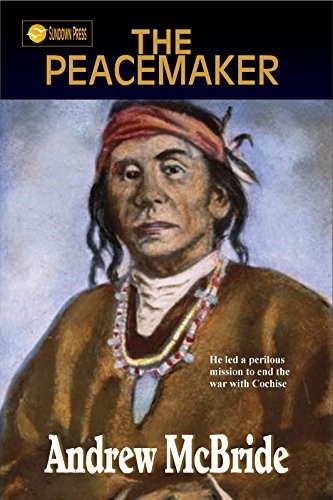
There are too many other outstanding HC episodes to list, but they include ‘Mark of the Turtle’ and ‘The Covey’ where the HC crew do battle with El Lobo, and comic episodes like ‘Champion of the Western World’ and ‘For What We Are About to Receive’ – there was plenty of humour in the HC to leaven the grittiness. I have to mention ‘The Peacemaker’ as my Sundown Press novel is partly based on that, (although you won’t find any HC characters in it) but there’s also ‘Gold is Where You Leave it,’ ‘Bad Day for a Thirst,’ etc., many more. A particular favourite is ‘Shadow of the Wind,’ a strange and brilliant episode bringing in historical figures like Johnny Ringo (a tremendous performance by LUKE ASKEW.)


Finally I’d single out two for special mention: ‘Best Man for the Job’ may have the best 5 minute sequence in any TV western, when Apaches attack a cavalry detail riding out of the ranch.


Action in 'Best Man for the Job'
And ‘Ride the Savage Land’ as, arguably, the very best HC episode and the best TV western episode ever made. In an episode that scores highly on every level, Henry Darrow is particularly impressive. 


Ride the Savage Land’ 

Last word on the High Chaparral is not from me, but a comment I found on the internet: ‘It was the greatest western television series ever made. Its gritty realism, high production values, location shooting and superb cast made it the very best the genre had to offer.’

Wednesday, 20 September 2017

AUTHOR FAVOURITES: THE OVERMOUNTAIN MEN by CAMERON JUDD

Prolific and distinguished author Cameron Judd (whose books tend to focus on the early frontier and Tennessee history) couldn’t pick an absolute favourite of his books (I know it’s a tough question!) but does have a particular fondness for THE OVERMOUNTAIN MEN, the first of his ‘The Tennessee Frontier Trilogy’.
JOSHUA COLTER has been trained to survive on the 18th Century Tennessee frontier by the hunter who adopted him. He enjoys his solitary life in the forests and mountains; but the troubles of the civilized world are encroaching. Conflicts escalate between settlers, Native Americans and the British government. Now Joshua will have to decide what he is willing to fight and die for, as the birth of a new nation breaks on the horizon.
THE OVERMOUNTAIN MEN brings in historical characters and events:  Daniel Boone, John Sevier, Tecumseh and The Boston Tea Party.


The Boston Tea Party

DANIEL BOONE (1734-1820) is well known, of course, as the ultimate early frontiersman, the ‘long hunter’ who plunged deep into the wilderness and blazed trails for others to follow, carving ‘D. Boon cilled a bar on this tree,’ pioneering the settlement of Kentucky and risking his scalp countless times.


Fess Parker played him in a long-running TV series.


And TECUMSEH (1768-1813) is regarded as one of the greatest Native American leaders, the Shawnee chief who came closest, perhaps, to forging a mighty alliance of the tribes to stand against white invasion – a dream that ended with Tecumseh’s death at the Battle of Thames River in Ontario in 1813.    


JOHN SEVIER (1745 – 1815) is perhaps less well known outside of Tennessee. 


JOHN SEVIER
He served as a colonel in the Revolutionary Army in the Battle of Kings Mountain in 1780, and commanded frontier militia in dozens of battles against the Cherokee in the 1780s and 1790s. He served as the only governor of the State of Franklin, which briefly existed as a prototype state in what is now eastern Tennessee. Sevier served six two-year terms as Tennessee's governor, between 1796 and 1809. His political career was marked by a rivalry with Andrew Jackson which nearly culminated in a duel in 1803.

Modern day Cherokees in traditional warrior dress
Publishers Weekly on CAMERON JUDD: “A keen observer of the human heart as well as a fine action writer.”
REVIEWS of THE OVERMOUNTAIN MEN:
‘A wonderful, entertaining and enlightening work’
'Amazing historical adventure... I love this book.' 
‘Although I realize these are works of fiction, they are so deftly interlaced with historical facts that I now have a much clearer picture of how my ancestors must have lived in the early years of the migration "over the mountains" to Tennessee, Kentucky and points west and south.’
‘Cameron Judd's ability to present both sides of the clash between Indian and White societies on the Tennessee frontier in the mid to late 18th century is nicely balanced with his depth of description of the natural beauty of the environment and a solid insight into the growth of the human spirit.’
‘A great and believable read!’
'Excellent reading. The history appears to be very accurate, the story very gripping and believable… enjoyed the historical picture of the Cherokee people in my area.’

‘Awesome book!’

Thursday, 14 September 2017

AUTHOR FAVOURITES: LAST STAND by DUANE BOEHM

Duane Boehm is the author of the highly successful Gideon Johann western series, running to 7 books now. He tells me the first of them, LAST STAND is his favourite, something I often find with authors. It’s his favourite story and Duane likes it particularly because the protagonist goes through the most change in it. Readers seem to agree as, the last time I looked, it had a staggering 223 5 star reviews!
Gideon Johann had been long gone from Last Stand, Colorado, seeming to have vanished after the Civil War. 


Colorado

He's a man running from his conscience, leaving both the girl he left behind and his best friend with a chapter of their lives unresolved. But one day in the early 1880s, a stranger is found shot and near death near Last Stand. The realization that this is Gideon, back after 18 years, sets in motion old grudges, love, and a chance for redemption.
The very grabby beginning of LAST STAND, where a wounded man is found, reminded me of THE TALL STRANGER (1957.)


Naturally the scenario of a mysterious stranger appearing in the home of a settler family (man, wife, son) reminded me of SHANE.


But it’s also about someone returning home after many years to find redemption, rather like the Gregory Peck character in THE GUNFIGHTER.


REVIEWS:
‘The stories are a mix of adventure, surprises and human family interaction, very well written.’
‘The humor and excitement of a great western! Read straight through!’
‘A very good author who keeps you in suspense.’
A really good story of redemption. Characters are great and it has the drama that you love in a good western.
‘One of the best western adventures I have read. Plot was very well thought out, action was realistic and plentiful without being over the top. Just the right mix of romance as well, and I loved the way it ended.
‘This is an AWESOME book. I couldn't wait to turn the pages…a passion-filled love story that touched my heart. I CANNOT wait to read Duane Boehms' next book.
https://www.amazon.com/Last-Stand-Gideon-Johann-Western-ebook/dp/B00K60LAH6/ref=sr_1_1?s=digital-text&ie=UTF8&qid=1483695179&sr=1-1&keywords=duane+boehm+last+stand

Wednesday, 6 September 2017

AUTHOR FAVOURITES: TIMELAPSE by LORRIE FARRELLY

Lorrie Farrelly is the award-winning author of not only westerns but romance, time travel, suspense and paranormal books. She tells me her favourite of her non-western books is TIMELAPSE, an alternate-reality, time-travel romantic thriller.


The two protagonists start falling in love whilst attempting to prevent a terrible crime from taking place - a crime that plunged both their worlds into nightmare and occurred over a hundred years before. To have a future, they will have to find their way back to 1902.


Here’s my 4 Star review of TIMELAPSE on Amazon.co.uk and Goodreads:

'An ingenious plot fuels a gripping tale

Alex is a young college professor in Washington DC, who has closed himself off from the world after a personal tragedy. Suddenly he finds himself transported to an alternative 2010, where the U.S.A. has become a repressive dictatorship policed by brutal storm troopers. Alex rescues a young woman rebel – Jessie – from their clutches. He discovers a reason to live again, through his growing attraction to Jessie. But then he finds a cause worth dying for. It seems an assassin’s bullet in 1902 set America on the path to oppression. Can Alex leap backwards through time – as he leaped sideways – and prevent the assassination ever happening, change history and save his country? He decides to risk it, and then Jessie decides to come along…

Lorrie Farrelly creates vulnerable and damaged but still likable characters you can care about, and plunges them into one perilous adventure after another. An ingenious plot fuels a gripping, fast-paced tale, dystopian sci-fi that also manages to reflect our own troubled times.'

Thinking of a love story against a backcloth of time travel and changing-history-to-change-the-future scenarios I naturally thought of THE TERMINATOR,


but also of 2 TV gems from the 60s: STAR TREK’S ‘The City on the edge of Forever


Joan Collins & William Shatner in STAR TREK’S ‘The City on the edge of Forever

and the brilliant OUTER LIMITS episode ‘The Man who was never born.’ 


Shirley Knight & Martin Landau in The Man who was never born.’

TIMELAPSE is a winning medallist in the 2014 READERS' FAVOURITE BOOK AWARDS.
Reviewers: 
‘Lorrie Farrelly is an incredible writer. This is such a remarkable novel… This novel greatly moved me.’
‘Lorrie Farrelly… has done a marvellous job of describing a world gone crazy.’


Wednesday, 30 August 2017

ANDREW McBRIDE interviewed by THOMAS RIZZO


 I’ve been fortunate enough to receive wide acclaim already for my Sundown Press novel THE PEACEMAKER, including 5 star reviews from 2 of the most successful western authors in the business. Spur award-winning and Pulitzer Prize-nominated author ROBERT VAUGHAN describes it as ‘a great book’. Meanwhile RALPH COTTON (also a Pulitzer-prize nominated novelist) writes: ‘For pure writing style, McBride’s gritty prose nails the time and place of his story with bold authority. …this relatively new author has thoroughly, and rightly so, claimed his place among the top Old West storytellers.’ I’m very grateful to both Robert & Ralph for their fantastic support.

I discuss THE PEACEMAKER, westerns and my writing in the interview I did with THOMAS RIZZO. A writer of fine westerns himself, Tom also keeps a wonderful blog which is an absolute treasure trove of stories from the real Wild West – great source material for us western fiction writers. Find it here. http://tomrizzo.com/storyteller-7-mc-bride/


Tom’s very kindly let me re-produce the interview on my blog today.   


THE PEACEMAKER is Andrew McBride’s sixth Western. All of them feature Calvin Taylor—Choctaw—in the role of the main character. 
In addition to his latest novel, he has written Death Song, The Arizona Kid, Shadow Man, Canyon of the Death, and Death Wears a Star.  
Andrew, who lives in Brighton, England, says watching a particular television in his pre-teens triggered his desire to start writing. He wrote a few adventure stories before immersing himself in novels by various authors to study how others approached the craft.
Each of Andrew’s novels has earned a broad range of acclaim. One reader describes The Peacemaker as “gritty, utterly authentic, and…gripping in emotion and atmosphere.”
After reading The Arizona Kid, one reader remarked, “If McBride’s stories can’t bring the western back to life then someone better call an undertaker.”

1. TELL US A BIT ABOUT YOUR LATEST NOVEL, THE PEACEMAKER, AND HOW YOU CAME TO WRITE IT.

It’s set in Arizona in 1871. The hero is an 18 year old, Calvin Taylor, who is nicknamed ‘Choctaw;’ he’s not an Indian but was born on the Choctaw Reservation in Oklahoma where his dad was an army contractor. Choctaw bumps into 2 government representatives – Sean Brennan and his adopted Apache daughter, Nahlin. They’re on a mission to talk peace to the Apaches, then at war with the white man. Choctaw is persuaded to guide this duo to the stronghold of the great chief Cochise, and along the way falls in love with Nahlin. Aficionados of the TV series ‘The High Chaparral’ will recognize that the story so far is loosely based on an episode of the HC, but the second half of the novel goes somewhere else entirely. I felt the original episode was a springboard for what could be a tremendous adventure story.  


Apaches

2. CALVIN TAYLOR, THE MAIN CHARACTER, APPEARS IN ALL SIX OF YOUR WESTERNS. AND HE IS A YOUNG PROTAGONIST. WHAT DREW YOU TO CREATE HIM?

I had the idea of a character who serves as a scout against the Apaches, then goes on to use the same skills – e.g. how to track, fight, hunt men down - as a Range Detective, lawman, Wells Fargo agent etc. I suppose the historical model is Tom Horn.


Tom Horn

Then having created a character who I could use in lots of ways, I couldn’t see the point in having a variation on him in different westerns, so he became the central character in all of them. A key fact about him is he’s a misfit – his sympathy with Native Americans makes him an outsider in his own society; they use him when they need him, but they don’t really accept him. In that regard he’s a bit like the Tom Jeffords character in Elliot Arnold’s great novel BLOOD BROTHER, or John Wayne in THE SEARCHERS. 


 John Wayne in THE SEARCHERS

I read somewhere that it’s a good writing tack to have your hero/heroine as ‘someone stuck up a tree while people throw stones at them.’ In other words having a central character who is also an underdog helps the audience empathise with them. And he is a young man who has seen probably too much, in terms of violence etc., for his age.  Indeed in THE PEACEMAKER, which is the first of my 6 westerns in chronological order, he’s only 18. He does a lot of growing up in that novel!      

3. WHY WAS IT IMPORTANT FOR YOU TO WRITE WESTERNS? WHAT DRIVES THAT AMBITION?

To most people under, say 45, westerns are largely irrelevant (I know that’s a sweeping generalization) but when I was a kid in England in the 60s and 70s, they were a huge part of the cultural landscape. I got my first taste of westerns via the movies (particularly those starring John Wayne and/or directed by John Ford.) and TV westerns. For me westerns ticked every box – they told tales that had strong dramatic tension, because they’re essentially morality plays about the conflict between right and wrong.  They deal with a wide range of moral dilemmas that the settlement of the west threw up: How do you tame a wilderness without destroying it? How much violence is necessary (and how much is excessive) in creating a law-abiding society? How can very different cultures (for example the white man and the Native Americans) co-exist? All painted on a canvas of great physical beauty and diversity. As I got into young manhood I became interested in the history of the real west, and also Native American culture. I started reading westerns - the likes of Matt Chisolm, Lewis B. Patten, Fred Grove, Gordon D. Shirreffs, Robert MacLeod etc. - which I enjoyed for their entertainment value. But a key western I read early on was THE BUFFALO SOLDIERS. 


The author, John Prebble, audaciously tackled some of the most familiar aspects of the western – the U.S. cavalry versus the Indians, the Texas Rangers etc. – but approached them with a fresh eye, dispensing with clichés and humanizing his characters. So I became aware you could get into greater depth in the western. When I found out Prebble – and also Matt Chisolm – were English, that encouraged me to have the confidence to give it a go too!

4. WHAT MADE YOU WANT TO BECOME A WRITER IN THE FIRST PLACE?

I think I always wanted to write. When I was only 7 there was a TV show called ‘Sir Lancelot’ I used to watch avidly. 


'The Adventures of Sir Lancelot'

Pretty soon I got hold of a notebook and started writing my own stories about Arthurian knights, until I got that little bump of hard skin on your finger you get from holding a pen a lot. After that I just wrote as a hobby all the time – adventure stories of various kinds. Then I started reading. For the authors I liked I used to think: ‘I want to be like them.’ For those I didn’t I thought: ‘I can do better than that!’ When I realized no one was writing exactly the kind of books I wanted to read, I thought I might as well write them myself. I started reading out my stuff at writing groups. This was in England in the 1980s. At one of them, a guy called Philip Caveney suggested I seriously consider writing for a living. That impressed me because he was the first person to take me seriously as a writer, and I valued his opinion because he was also the first published author I’d met – he’s been successful writing thrillers and now children’s fiction – so I reckoned he knew what he was talking about! A bit later, in the early 90s, I had to choose between working full time or working in a more irregular way, which would give me less money, but more time to write. I chose the latter. I don’t regret it, although the finances have certainly been precarious at times. I guess I just love the writer’s life!    

5. TELL US A LITTLE ABOUT YOUR WORK HABITS. DO YOU HAVE GOALS OF A CERTAIN NUMBER OF WORDS A WEEK, OR DO YOU JUST AS WRITE WHEN INSPIRATION STRIKES?

The writer who waits for inspiration will wait for ever.  As I say, Phil Caveney was the first published novelist I’d met, so I asked him what he was doing right that other writers weren’t doing. He basically told me that he treated being a writer as a day job, and you had to work at it regularly, on a daily basis if possible. So I do my best to follow that. If you’re planning to write a novel of, say 80,000 words, first you need to give yourself a DEADLINE. If you decide you’re going to write it in 2 years, that’s 110 words a day. The thing is to keep to that deadline and write those 110 words a day, or, if it’s easier, 770 words a week. In my present circumstances, rather than writing daily, I can set aside 2 days a week for writing. The thing is to hit your word count and deadlines. If you let that slip, you’ll join the ranks of would-be authors who spend 7 or 10 years or more writing one novel, in a vain quest for perfection.

6. IF YOU COULD HAVE ANY WRITER – LIVING OR DEAD – STOP BY YOUR HOME, WHO WOULD IT BE AND WHAT WOULD YOU ASK HIM OR HER?

How about J.K. Rowling? I’d ask her: “How come you managed to make so much money?”  Seriously, I couldn’t pick just one: there’s so many I’ve learned from, from Dickens to John Prebble to Chandler, Rosemary Sutcliff, Elmore Leonard… I’d ask them: “How do I get as good as you?”

7. WHEN YOU’RE NOT WRITING, HOW DO YOU SPEND YOUR LEISURE TIME?

Listening to music – I’ve got fairly wide tastes here. I like watching live music too, in small venues like pubs, watching movies (mostly on Youtube these days.) I’m keen on good conversation. I love reading, but I’m struggling right now to find enough time for it. Country walking - I’m lucky enough to live in East Sussex, which is one of the most beautiful parts of England. It has a great coastline, with cliffs and everything, and rolling hills called the South Downs that I like to explore.


The Sussex Downs, England 


Coast of East Sussex, England
BLURB for THE PEACEMAKER:
Eighteen-year-old scout Calvin 'Choctaw' Taylor believes he can handle whatever life throws his way. He’s been on his own for several years, and he only wants to make his mark in the world. When he is asked to guide peace emissary Sean Brennan and his adopted Apache daughter, Nahlin, into a Chiricahua Apache stronghold, he agrees—but then has second thoughts. He’s heard plenty about the many ways the Apache can kill a man. But Mr. Brennan sways him, and they begin the long journey to find Cochise—and to try to forge a peace and an end to the Indian Wars that have raged for so long. During the journey, Choctaw begins to understand that there are some things about himself he doesn’t like—but he’s not sure what to do about it. Falling in love with Nahlin is something he never expected—and finds hard to live with. The death and violence, love for Nahlin and respect for both Cochise and Mr. Brennan, have a gradual effect on Choctaw that change him. But is that change for the better? Can he live with the things he’s done to survive in the name of peace?
 Buy it on Amazon here:


EXTRACT:
Choctaw blinked sweat and sunspots out of his eyes and began to lower the field glasses; then he glimpsed movement.

He used the glasses again, scanning nearer ground, the white sands. He saw nothing.

And then two black specks were there suddenly, framed against the dazzling white. They might have dropped from the sky.

They grew bigger. Two horsebackers coming this way, walking their mounts. As he watched they spurted into rapid movement, whipping their ponies into a hard run towards him.

The specks swelled to the size of horses and men. Men in faded smocks maybe once of bright colour, their long hair bound by rags at the temple. They had rifles in their hands.

Breath caught in Choctaw’s throat. Fear made him dizzy. His arms started to tremble. He knew who was coming at him so fast.

Apaches.

And you killed them or they killed you.