Showing posts with label North Carolina. Show all posts

Thursday, 20 May 2021

AUTHOR FAVOURITES: TOM DOOLEY by BILL BROOKS


Bill Brooks is the author of many highly-acclaimed historical and western novels. Booklist compared his work with classics like ‘The Virginian,’ ‘Shane’ and ‘Hombre’.

Bill tells me a favourite of his own novels is TOM DOOLEY, published by Five Star Publishing.


According to Wikipedia, TOM DOOLEY’s real name was THOMAS C. DULA. He was born to a poor Appalachian hill-country family in Wilkes County, North Carolina in 1845. At school he "probably played with the female FOSTERS" – ANNE and her cousins LAURA and PAULINE.


TOM DOOLEY

Dula and Anne Foster may have been intimate as teenagers, but in 1859 Anne married a local farmer and cobbler, becoming Anne Melton.

In 1862, Tom enlisted in the Confederate Army as a private in Company K, 42nd North Carolina Infantry Regiment.

On one surviving army muster roll he is listed as a "musician" and a "drummer." Dula played the fiddle (although not, as was reported, the banjo.) Dula was wounded several times in battle. He was captured and sent to a northern prison camp. He was released at the end of the war in April 1865 and returned home.

Dula – supposedly a "ladies man” and “libertine” - continued his relationship with the married Anne.


ANNE FOSTER/MELTON

It was not long before he began an intimate relationship with Laura Foster too. Folklore has it that Laura became pregnant, and she and Dula decided to elope. On the morning she was to meet Dula, May 25, 1866, Laura quietly left her home and rode off on her father's horse. She was never seen alive again.

Suspicion that Dula had murdered Laura caused him to flee the area. Then a grave was found containing Laura’s body, her legs drawn up to fit in the shallow grave. She had been stabbed once in the chest.


No one really knows what happened to Laura, but some stories implicate Anne. It’s claimed that Anne murdered Laura out of jealousy because she was marrying Dula; that Dula suspected Anne was the murderer, but he still loved Anne enough to take the blame himself. Pauline Foster testified that Anne showed her Laura’s grave one night.

A posse went after Dula. He was arrested and tried for Laura’s murder, convicted, given a new trial on appeal and convicted again. Facing execution, Dula wrote a 15-page account of his life, as well as a note that exonerated Anne. His literacy is highly unusual, considering the harsh poverty of his upbringing.

As he stood on the gallows, Dula reportedly said, "Gentlemen, I did not harm a single hair on that fair lady's head.” He was executed on May 1, 1868, nearly two years after Laura's murder.


How did an obscure incident in backwoods Appalachia, which in reality may have contained some quite sordid elements, turn into a folk legend? Well, the trial received national publicity from newspapers such as ‘The New York Times,’ dwelling on the eternal-triangle aspect and the mysteries inherent in the story.  And then a local poet, THOMAS LAND, is believed to have written a song about the tragedy titled ‘Tom Dooley’ (which was how Dula's name was pronounced) shortly after Dula was hanged. This cemented Dula's place in North Carolina legend.
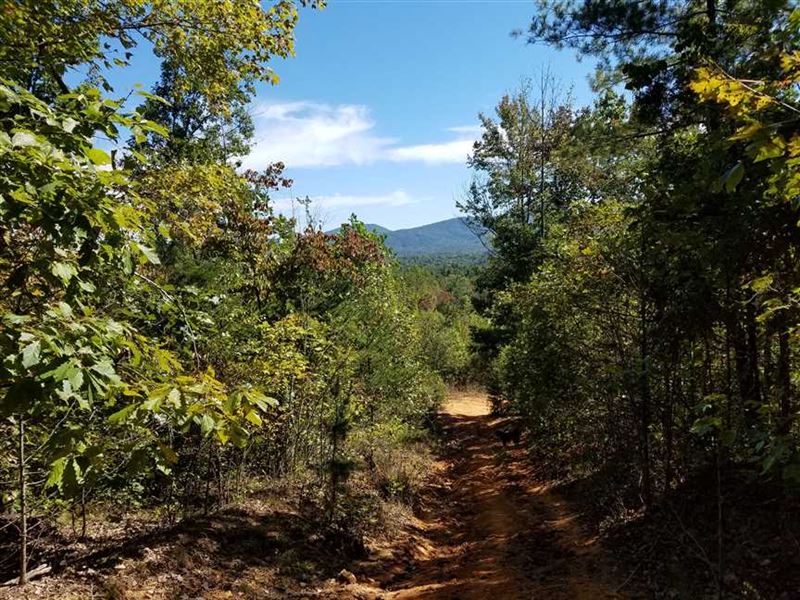

Wilkes County, North Carolina


This aptly-named ‘murder ballad’ gives a prominent role in the tragedy to a man named Grayson. In reality, COLONEL JAMES GRAYSON, of Trade, Tennessee was someone Dula worked for about a week. Later Grayson helped the posse that caught Dula, but that was his only part in the affair.

Another tale says that Anne confessed to the murder on her deathbed, having killed Laura in a fit of jealousy, afterwards begging Tom to help her conceal the body.

In 2001, the citizens of North Wilkesboro presented a petition to the North Carolina Governor, asking that Dula be posthumously pardoned. No action was taken.

A revival of Land’s murder ballad became a Number One hit single for THE KINGSTON TRIO in 1958.


Here they are performing it live: https://www.youtube.com/watch?v=S3zdE8bliGI

This spawned a film. MICHAEL LANDON, midway between ‘I was A Teenage Werewolf’ and Bonanza,’ portrayed Dula in ‘The Legend of Tom Dooley’ (1959.) The movie is a fictional treatment inspired by the lyrics of Land's folk song.


REVIEWERS on TOM DOOLEY by Bill Brooks:

‘Brooks has a unique talent that extends far beyond the formulas of the western genre. He’s an extraordinary historical novelist.’

‘He captures the everyday humanity behind the legends while simultaneously adding to the myth of the great golden West.’

Find TOM DOOLEY here: https://www.amazon.com/Tom-Dooley-American-Bill-Brooks/dp/1432832271

And here: https://www.amazon.co.uk/Tom-Dooley-American-Bill-Brooks/dp/1432832271/ref=sr_1_1?dchild=1&keywords=tom+dooley+bill+brooks&qid=1621343275&sr=8-1


Wednesday, 15 November 2017

AUTHOR FAVOURITES: SEASON OF RECKONING by CAMERON JUDD

Prolific and distinguished author Cameron Judd (whose books tend to focus on the early frontier and Tennessee history) couldn’t pick an absolute favourite of his books (I know it’s a tough question!) but does have a particular fondness for his American Civil War/ Mountain War trilogy. His favourite character is Ben Scarlett, the town drunk of Knoxville, Tennessee, who is central to the trilogy.
The final part, SEASON OF RECKONING, takes us to 1864. As the Civil War is ending, the mountains of eastern Tennessee and western North Carolina see even more destructive violence and terror; a wounded nation has to start healing after the wreckage of war.
Together, Amy Deacon, Ben Scarlett, and Greely Brown have to face the bitter reality that the Mountain War will carry on after the Civil War has ended.


Nurse Ann Bell tends wounded soldiers in a Nashville Hospital 1864
In late 1864 the Confederacy suffered two major defeats in Tennessee. At the Battle of Franklin Confederate LT. GENERAL JOHN BELL HOOD's attacks on fortified Union positions, held by GENERAL JOHN SCHOFIELD, were repulsed with heavy loss. 6 Confederate generals were killed, 7 wounded and 1 captured, in what is sometimes called the 'Pickett's Charge of the West.' 

Artist’s impression of the Battle of Franklin


Troops at the scene of the Battle of Franklin 1864
A few weeks later MAJOR GENERAL GEORGE H. THOMAS routed Hood's army at the Battle of Nashville. The Confederate Army of Tennessee was effectively destroyed as a fighting force for the remainder of the war.


Soldiers’ camp at the site of the Battle of Nashville 1864
Although Tennessee was a Confederate state, a significant minority – particularly in the east of the state – supported the Union. These divisions are reflected in the fact that ANDREW JOHNSON, from Tennessee, was elected Vice President under Abraham Lincoln in 1864. He became President after Lincoln's assassination in 1865.


Andrew Johnson

The difficult aftermath of the war in the defeated Confederacy is touched on in movies like ‘The Undefeated’ and ‘Run of the Arrow’ – as well as ‘Gone with the Wind’ of course.


The Undefeated

Gone with the Wind - images of the ruined South:


Reviews of SEASON OF RECKONING:
‘I hated for it to end. Totally engrossing series.’
‘Awesome.’
‘Great read.’
‘An outstanding trilogy.’
'Great book. Superb author.'
‘I can’t say enough about this trilogy. I couldn’t put it down – even though I read this book on my honeymoon!’

Wednesday, 8 November 2017

AUTHOR FAVOURITES: THE PHANTOM LEGION by CAMERON JUDD

Prolific and distinguished author Cameron Judd (whose books tend to focus on the early frontier and Tennessee history) couldn’t pick an absolute favourite of his books (I know it’s a tough question!) but does have a particular fondness for his American Civil War/ Mountain War trilogy. His favourite character is Ben Scarlett, the town drunk of Knoxville, Tennessee, who is central to the trilogy.

The 2nd in the series, THE PHANTOM LEGION, deals with events of 1863, when the war in Tennessee and North Carolina goes underground and soldiers use signalling points like Clinch Mountain and Lookout Mountain.


Lookout Mountain

It continues the story of Amy Deacon, Ben Scarlett, Sam Colter and Greeley Brown as they wage an underground war on the side of the Union. This reflects how Tennessee, although part of the Confederacy, had a large minority of Union supporters, particularly in the east of the state.


Confederate soldiers

Battles fought in this area at this time included actions at Fort Sanders at Knoxville, the Battle of Bean’s Station, Chattanooga and Chickamauga.


Artists depiction of the Battle of Chattanooga 1863

Confederate leaders included 


General Braxton Bragg


and General James Longstreet.

Their Union opponents included


 Generals Ambrose Burnside,


Joseph Hooker

and U.S. Grant – who later became President, of course.

Publishers Weekly on CAMERON JUDD: ‘A keen observer of the human heart as well as a fine action writer.’
REVIEWS of THE PHANTOM LEGION:

‘Draws attention to a part of the Civil War that little has been written about.’
‘Historically accurate, fast paced, easy reading.’

‘This is just as good as the first one.’

Wednesday, 1 November 2017

AUTHOR FAVOURITES: THE SHADOW WARRIORS by CAMERON JUDD

Prolific and distinguished author Cameron Judd (whose books tend to focus on the early frontier and Tennessee history) couldn’t pick an absolute favourite of his books (I know it’s a tough question!) but does have a particular fondness for his American Civil War/ Mountain War trilogy. His favourite character is Ben Scarlett, the town drunk of Knoxville, Tennessee, who is central to the trilogy. The first instalment, THE SHADOW WARRIORS, paints a bold picture of the turbulent first years of the Civil War in the mountains of Tennessee, Kentucky and North Carolina.


The Great Smoky Mountains North Carolina/ Tennessee

As the Civil War loomed Tennessee was a divided state. A referendum in February 1861 to secede from the United States was defeated by a 54–46% margin. But after the attack on Fort Sumter in April and the outbreak of hostilities, opinion shifted. On June 8, 1861, voters approved a second referendum calling for secession, and Tennessee became the last state to join the Confederacy.


Confederate soldiers at Shiloh, Tennessee 1862
Tennessee furnished more soldiers for the Confederate Army than any other state besides Virginia; but it also provided more soldiers for the Union Army than the rest of the Confederacy combined.


Confederate officers

SHADOW WARRIORS reflects the polarisations of Tennessee in that Amy Deacon, daughter of an arch-secessionist newspaperman, is secretly writing pamphlets for the pro-Union ‘Underground Railroad.’
In this place of bitter division, Falstaffian Ben Scarlett struggles to stay neutral… but can he succeed?
The ‘Underground Railroad’ was a network of secret routes and safe houses established during the early-to-mid 19th century. It was used by slaves in the Confederate states to escape into free states and Canada, helped by abolitionists and sympathetic allies. One estimate suggests more than 100,000 slaves escaped via the ‘Railroad.’


Fleeing slaves who used 'The Underground Railroad.'

‘Gone with the Wind’ may be (with allowances for monetary inflation) the most successful film in box-office history, but the American Civil War has not been an overly-popular subject in film and TV. Among the movies that have Civil War settings are ‘Raintree County,’ ‘Shenandoah,’ ‘The Horse Soldiers,’ ‘Glory’ and – a particular favourite of mine – ‘The Raid,’ from 1954, about a Confederate fifth column operating in Union Territory.


'Shenandoah' (1965)


'The Raid'


An engraving from Brownlow's Sketches, showing Confederate soldiers marching Union prisoners through the streets of Knoxville in December 1861

Publishers Weekly on CAMERON JUDD: ‘A keen observer of the human heart as well as a fine action writer.’
REVIEWS of THE SHADOW WARRIORS:
'Another great read by Cameron Judd. Mr. Judd's depth of historical knowledge of Tennessee history is vast, yet he is able to weave it seamlessly into his stories while creating great fictional characters.’

‘Very good plot development based on historical events.’

‘A terrific novel by an excellent author.’

‘Cameron Judd's Civil War trilogy illuminates a dark corner of the Civil War, making the era come to life with all the conflict and danger that characterized the war in the mountain south.’ -- Sharyn McCrumb, New York Times best-selling author

‘You would be hard-pressed to find a writer of historical novels better able to capture the dialects, the smells of rabbit cooking over an open fire, or the scent of breath sweetened with cedar twigs …the way Judd does here.’